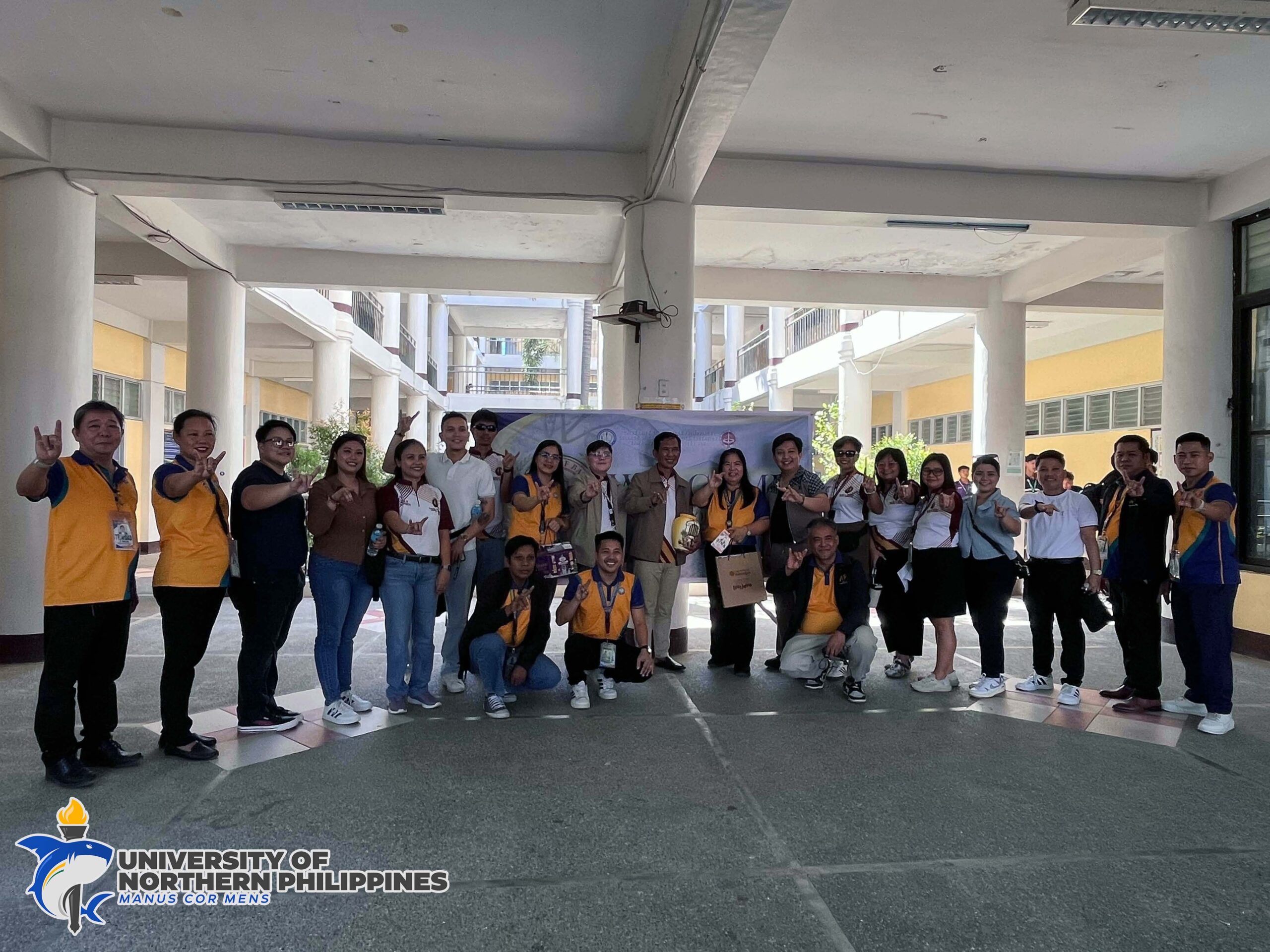
The University of Northern Philippines, through its College of Criminal Justice Education (CCJE), welcomed officials and representatives of the University of Batangas (UB) on November 19, 2026 for a benchmarking and knowledge-sharing visit.
The benchmarking visit provided the University of Batangas with an opportunity to examine UNP’s academic initiatives and strategies for ensuring comprehensive curriculum implementation, particularly in addressing essential competencies and prescribed course outcomes. Through the exchange of practices and institutional insights, UB sought to gain valuable perspectives on strengthening students’ mastery of fundamental concepts, bridging learning gaps, and enhancing academic preparation for comprehensive and professional examinations. The engagement also opened avenues for sharing effective approaches to improve instructional delivery and ensure that students acquire the knowledge and competencies necessary for academic and professional advancement.
The exchange further examined how the College’s retention policy serves as a vital instrument in shaping students’ academic discipline, perseverance, and sense of responsibility toward completing their criminology education. The policy was recognized as a strategic approach in setting clear academic expectations, encouraging students to maintain consistent performance, and cultivating the determination needed to meet the demands of the program, particularly during the formative years of their college education.
Beyond academic policies and practices, the benchmarking discussions also opened opportunities for broader institutional cooperation in strengthening criminology education. Both institutions explored potential collaborative initiatives, particularly in updating and enhancing the On-the-Job Training manual, advancing student and faculty research undertakings, providing greater support for thesis development, and upgrading laboratory facilities. These areas of cooperation are expected to enrich instructional delivery, expand research opportunities, and provide students with more meaningful hands-on experiences that bridge classroom learning with the actual demands of the criminal justice profession.
The benchmarking engagement brought together key academic leaders, program heads, faculty members, and administrative personnel from both institutions, reflecting their shared commitment to strengthen criminology and criminal justice education.
Representing UNP-CCJE were Dr. Sina Bestre, Dean; Prof. Myline Aleson, Assistant Dean; Dr. Arlan Reburon, BS Criminology Program Head; Dr. Marlow Pacapac, Master of Science in Criminal Justice Program Head; Dr. Mervic Parinas, Doctor of Philosophy in Criminal Justice Program Head; Prof. Trinidad Rojo, Unit Research Coordinator; Dr. Edwin Cerna, Extension Coordinator; Mr. Daroll Rabina, Laboratory Custodian; Dr. Charmaine Angela Rabara, College Information Coordinator; Mrs. Jacqueline Castillo, ETEAP Focal Person; Prof. Lorna Navarro, On-the-Job Training Coordinator; and Ms. Jenifer Dato-Benzon.
The UB delegation also paid a courtesy visit to UNP President Dr. Erwin Cadorna, providing an opportunity to strengthen institutional ties, exchange perspectives on academic development and reaffirm the importance of inter-university partnerships in advancing quality higher education.
Joining Dr. Caliguiran from the University of Batangas were Leslie Ann Banaag, Johnrey Banlasan, Claire Rivera, John Cherubim Estoque, Emerjhon Hernandez, Jeanneth Lopez, Reah Guerna, Avegail Sanchez, Jowelyn Peralta, Nino Fabresas, Maria Lea Delfin, Pharri-oy Branzuela, and FO2 Krissa Madalogdog.
The engagement reinforced the value of inter-institutional collaboration in advancing the quality of criminal justice education, as both universities explored opportunities to share effective academic practices, strengthen institutional capabilities, and pursue initiatives responsive to the evolving demands of the discipline. Through sustained knowledge exchange and collaborative undertakings, UNP-CCJE and UB seek to enhance instructional excellence, research productivity, and practical learning opportunities while preparing future criminal justice professionals for the challenges of their chosen field.
Photo by The Defender.