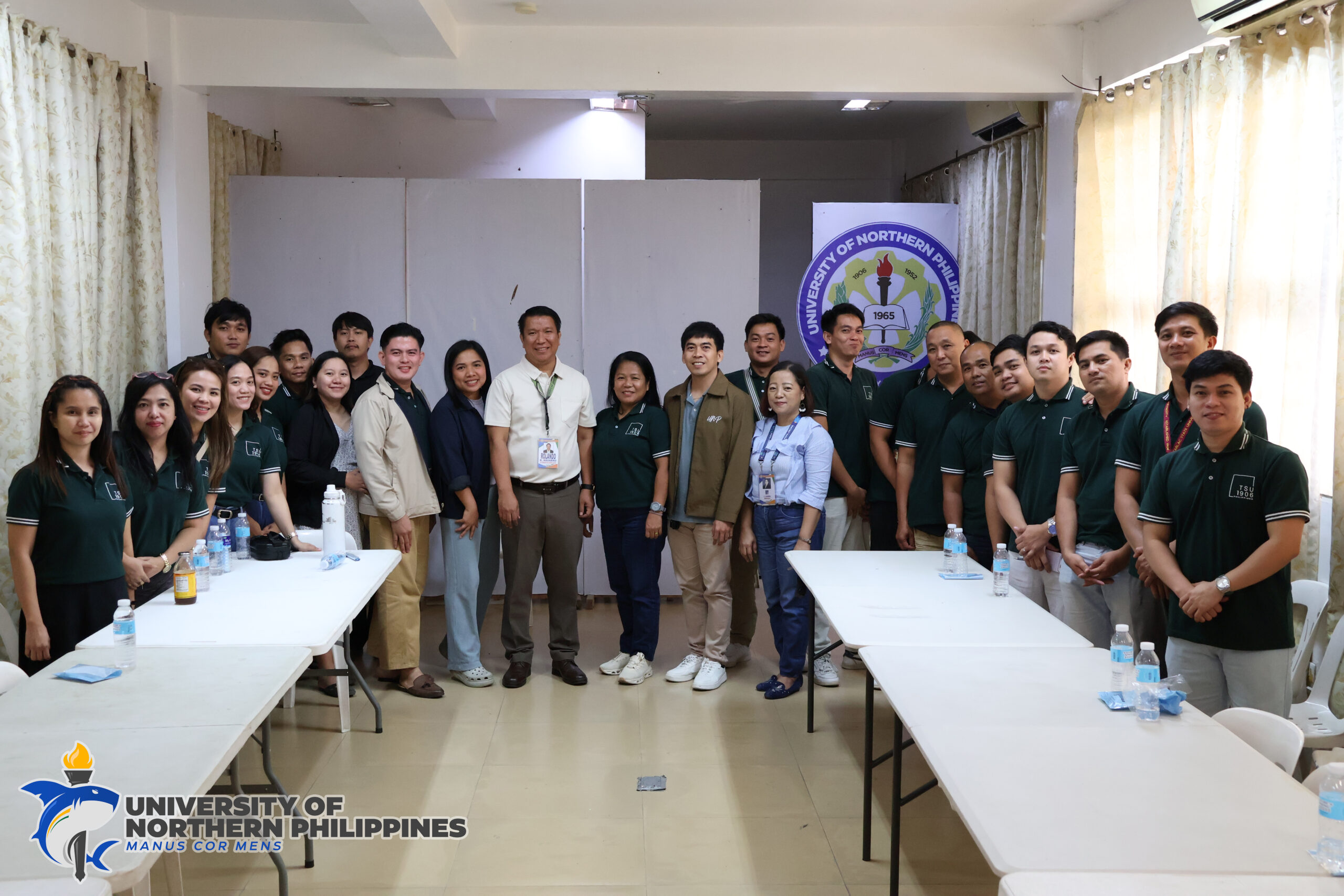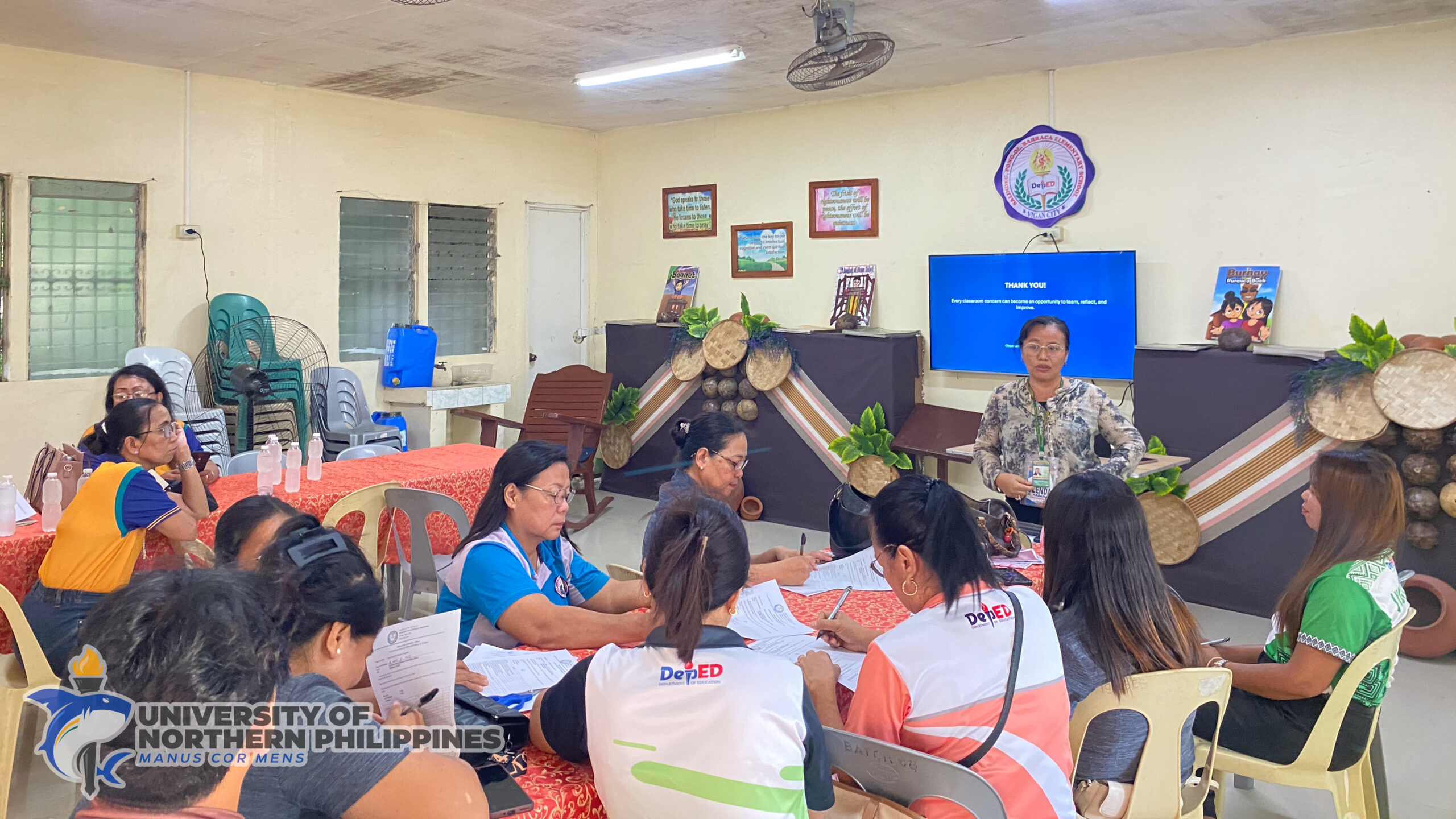
The University of Northern Philippines, through its College of Teacher Education, strengthened elementary teachers’ capacity to conduct classroom-based research through “Mentoring the mentor: Action Research capability building,” held on November 26, 2026 at Salindeg-Pong-ol Barraca Elementary School (SPBES).
Implemented under Project DUR-AS (Dagiti Ubbing Raemenda ti Adal ken Syensya), the initiative responded to the request of SPBES Principal Mrs. Avelina Alon for a Learning Action Cell session designed to enhance teachers’ knowledge and competencies in conducting action research.
Eleven teachers from Salindeg-Pong-ol Barraca Elementary School, led by Principal Mrs. Alon, participated in the capability-building session facilitated by Dr. Glenda Rabanal, which focused on enhancing their ability to identify researchable classroom challenges and formulate clear, focused, and actionable action research titles.
Dr. Glenda Rabanal emphasized the importance of grounding action research in recurring classroom concerns backed by concrete evidence, guiding teachers in identifying learning difficulties, pupil participation and behavioral issues, instructional challenges, and other factors that affect learners’ academic progress and development.
She stressed the need to systematically gather evidence from assessment results, classroom records, direct observations, pupil and parent feedback, and learners’ outputs to distinguish actual problems from their symptoms and underlying causes. This approach, she explained, enables teachers to focus their research on specific, manageable concerns that require practical interventions.
Dr. Rabanal also walked the participants through the key stages of action research, from identifying classroom problems and formulating research questions to designing and implementing interventions, gathering evidence, and evaluating results. She further provided practical guidelines and examples for crafting focused research titles that clearly identify the proposed intervention, intended learning outcomes, and target learners or classroom setting.
A hands-on workshop was conducted, engaging teachers in identifying actual classroom challenges, validating these through evidence, narrowing their research focus, and developing appropriate instructional strategies and interventions. The activity enabled participants to transform everyday teaching experiences into meaningful research inquiries that address specific learning needs and promote more effective classroom practices.
The session highlighted action research as a vital instrument for professional development and the continuous enhancement of teaching and learning. Through Project DUR-AS, the Bachelor of Elementary Education program continues to extend meaningful professional development opportunities to its partner school, equipping teachers to become reflective practitioners and research-informed educators.
Beyond its focus on strengthening reading literacy, the initiative further reinforced the partnership between UNP and SPBES by expanding educational support to include teacher capacity development and promoting research-based improvements in the school community.