Strengthening future nurses’ ability to communicate with patients from diverse linguistic and cultural backgrounds, the University of Northern Philippines College of Nursing conducted Phase 1 of its Seminar-Workshop on Foreign Language on November 10, 2026, at Tadena Hall, emphasizing the value of multilingual competence in providing quality healthcare in an increasingly globalized world.
The seminar-workshop sought to equip participants with basic foreign language skills while broadening their understanding of how language proficiency can enhance professional competence, expand global career opportunities, and facilitate meaningful engagement with people from diverse cultural backgrounds.
In his opening remarks, Dr. Francis Don Nero, Dean of the College of Nursing, stressed the importance of equipping nursing students with effective communication skills to meet the demands of an increasingly globalized healthcare environment. He highlighted the need for future nurses to develop competencies that would enable them to interact confidently with patients and healthcare professionals from diverse cultural and linguistic backgrounds, particularly as professional opportunities and healthcare engagements continue to extend beyond national borders.
Providing the academic foundation for the activity, Dr. Marjorie Dafun of the College of Hospitality and Tourism Management delivered a lecture on the Significance of Foreign Language, emphasizing its role in promoting effective communication, cultural sensitivity, and international collaboration. She explained that learning a foreign language goes beyond acquiring vocabulary and grammatical skills, as it also enables individuals to understand cultural differences, overcome language barriers, and establish meaningful connections with people from other countries. She further highlighted how foreign language proficiency can broaden professional opportunities and prepare future practitioners to adapt to multicultural work environments and participate more effectively in international engagements.
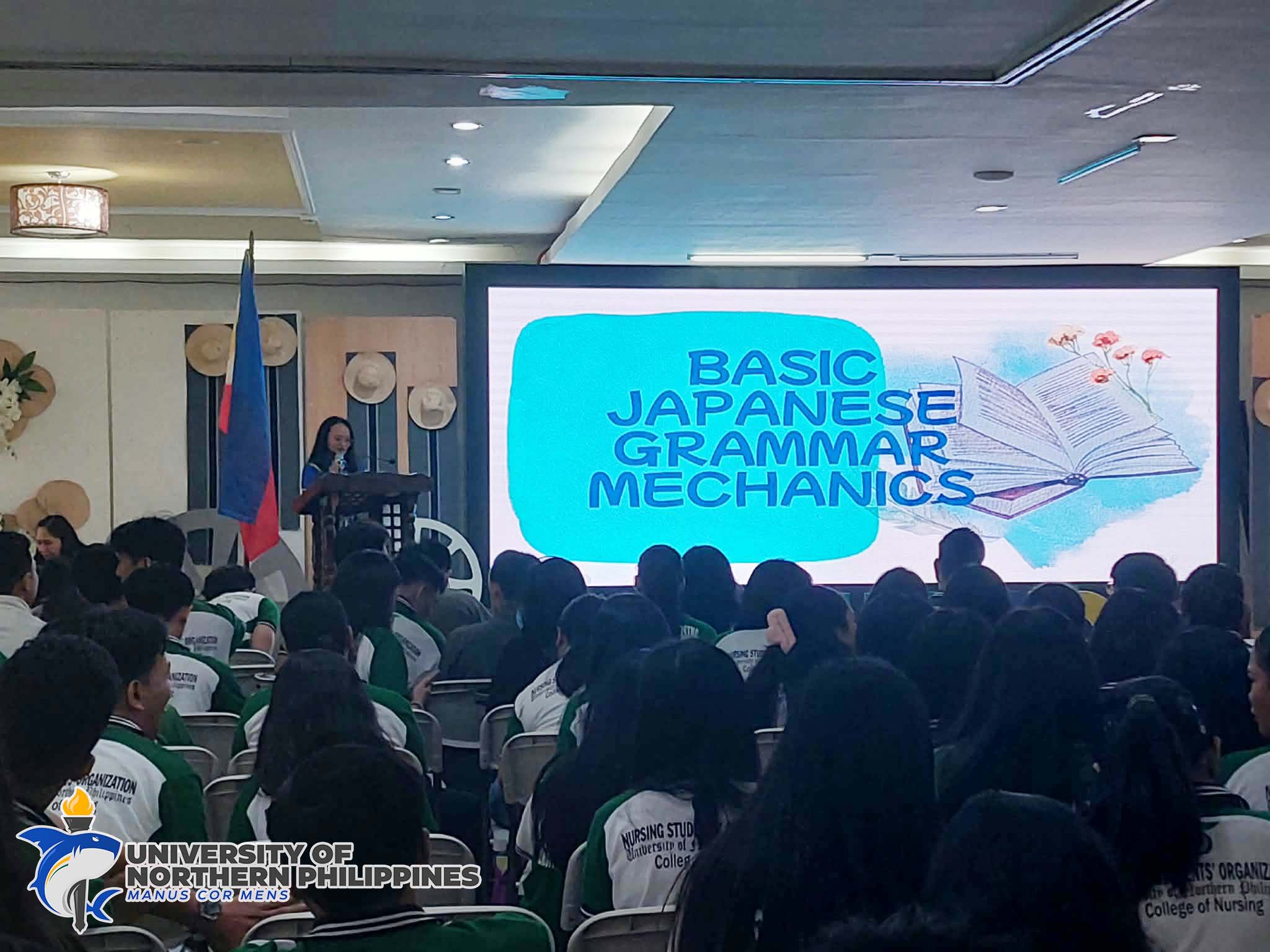
Building on this foundation, the succeeding session explored Japanese Characters, Writings, and Rules of Pronunciation, introducing participants to the basic components of the Japanese writing system and the fundamental principles governing its pronunciation. Through the discussion, participants gained initial exposure to the language’s written forms and sound patterns, providing them with a foundation for recognizing and pronouncing basic Japanese expressions.
The learning sessions continued with Basic Grammar (Nouns and Pronouns), which familiarized participants with essential grammatical structures used in forming simple Japanese expressions. The discussion provided a basic understanding of how nouns and pronouns function in sentences, helping participants develop the foundational knowledge needed to comprehend and construct simple statements in the foreign language.
To translate the concepts discussed into practical learning experiences, the seminar-workshop featured an interactive workshop that gave participants the opportunity to apply their newly acquired knowledge, practice basic language skills, and strengthen their grasp of the lessons. The hands-on activities also provided a venue for active participation, allowing them to become more familiar with the fundamentals of foreign language learning and appreciate its practical applications in professional communication.
The activity formally concluded with the closing remarks of Prof. Mercedes Anicas, Assistant Dean of the College of Nursing, who conveyed the importance of sustaining the participants’ interest in foreign language learning as part of their academic and professional preparation.
Through this initiative, the College of Nursing further advances its internationalization agenda by recognizing foreign language proficiency and cultural awareness as essential competencies for future nursing professionals. The integration of language learning into its academic activities reflects the College’s commitment to develop well-rounded graduates capable of responding to the communication demands of multicultural healthcare settings, engaging with international communities, and pursuing professional opportunities beyond the country.
Article by Rizza Abinsay.