Ilocano Studies Center
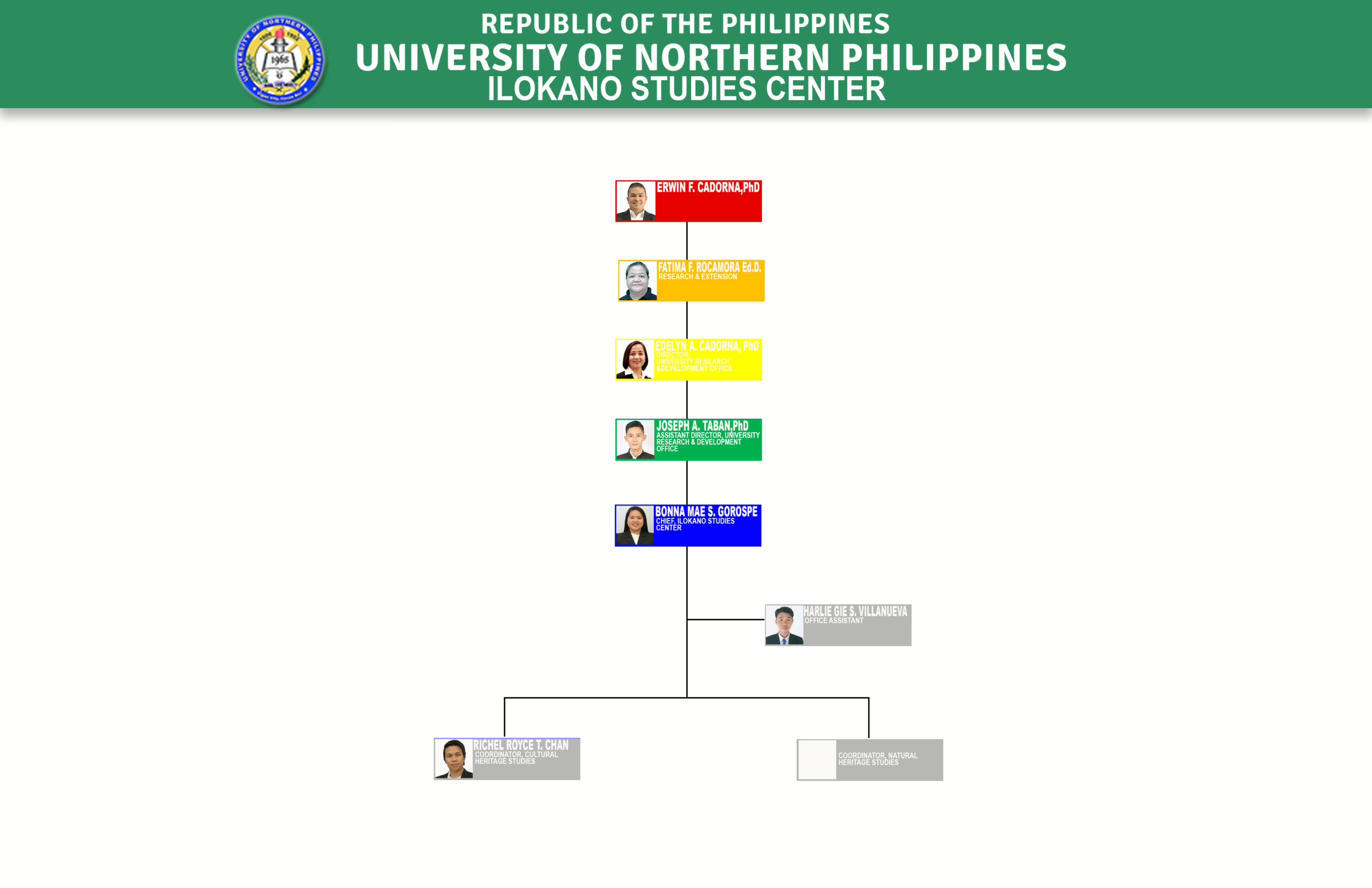
CENTER CHIEF: BONNA MAE S. GOROSPE
STAFF:
- RICHEL ROYCE T. CHAN
- HARLI GIE S. VILLANUEVA
About the Center
The Ilokano Studies Center is more than just a repository of artifacts and documents—it is a living space where the stories, traditions, and identities of the Ilokano people are cared for and celebrated. Guided by its commitment to preserving and promoting Ilokano culture, the Center supports and conducts meaningful research that deepens our understanding of who we are as a community.
Beyond research, the Center brings people together through programs, projects, and activities that spark conversations, encourage knowledge sharing, and strengthen cultural appreciation across generations. It works hand in hand with government agencies, schools, cultural groups, and community partners to expand its reach and ensure that Ilokano heritage continues to thrive.
Through its sustained efforts, the Ilokano Studies Center remains a trusted guardian of Ilokano heritage—a welcoming hub where culture is kept alive, knowledge is created, and people are empowered to take pride in their roots.
The Center is led by a Chief and supported by a Coordinator who assists in implementing its research initiatives, cultural programs, and administrative functions.
VISION
The Ilokano Studies Center (ISC), which houses the repository of tangible and intangible cultural heritage, shall aim to preserve and promote the Ilokano culture, identity, society, and history primarily through the conduct and monitoring of research undertakings.
MISSION
The center fosters wider participation of researchers from all disciplines by espousing the inter-disciplinary approach to the study and explication of the Ilokano culture as well as the Philippine culture in general using appropriate frameworks, lenses and perspectives. Furthermore, the center engages in programs, activities, and projects that highlight continuing cultural dialogue, discourses or exchanges that are geared toward the promotion and preservation of rich cultural heritage carried primarily through research.
OBJECTIVES
Make Ilokano studies a component of the university research agenda of the university;
Undertake research on the Ilokanos and their works (past and at present);
Monitor the presentation of completed research in conventions or congresses or for their publication in peer-reviewed and reputable journals, and their dissemination via extension activities.
Hold lecture series and capacity-building trainings/workshops for researchers, faculty members and students along Ilokano culture, society and environment;
Promote qualitative research methodology in the conduct of research in the university both in the undergraduate and graduate levels;
Document Ilokano works to augment reference materials for future research undertakings and inquiries;
Map Ilokano research undertaken by faculty personnel and students in the university;
Collect books, magazines and other forms of Ilokano literature through purchases and donations;
Collect and document different various forms of Ilokano folklore;
Build linkages with institutions/groups with the same goals and objectives of promoting and preserving the Ilokano heritage.
PRIORITY AREAS OF THE ILOCANO STUDIES CENTER
Extant cultural heritage of ethnolinguistics groups
- Extant cultural heritage of ethnolinguistics groups
- Dictionary (Glossary) of cultural metaphors
- Retrieval and documentation of indigenous technology in Filipino expressive culture
- Documentation of indigenous sustainable farming, fishing, and aquaculture practices, and IP Education (Madrasa Program, etc)
- Oral and Local Histories
Heritage Conservation (Tangible and Intangible)
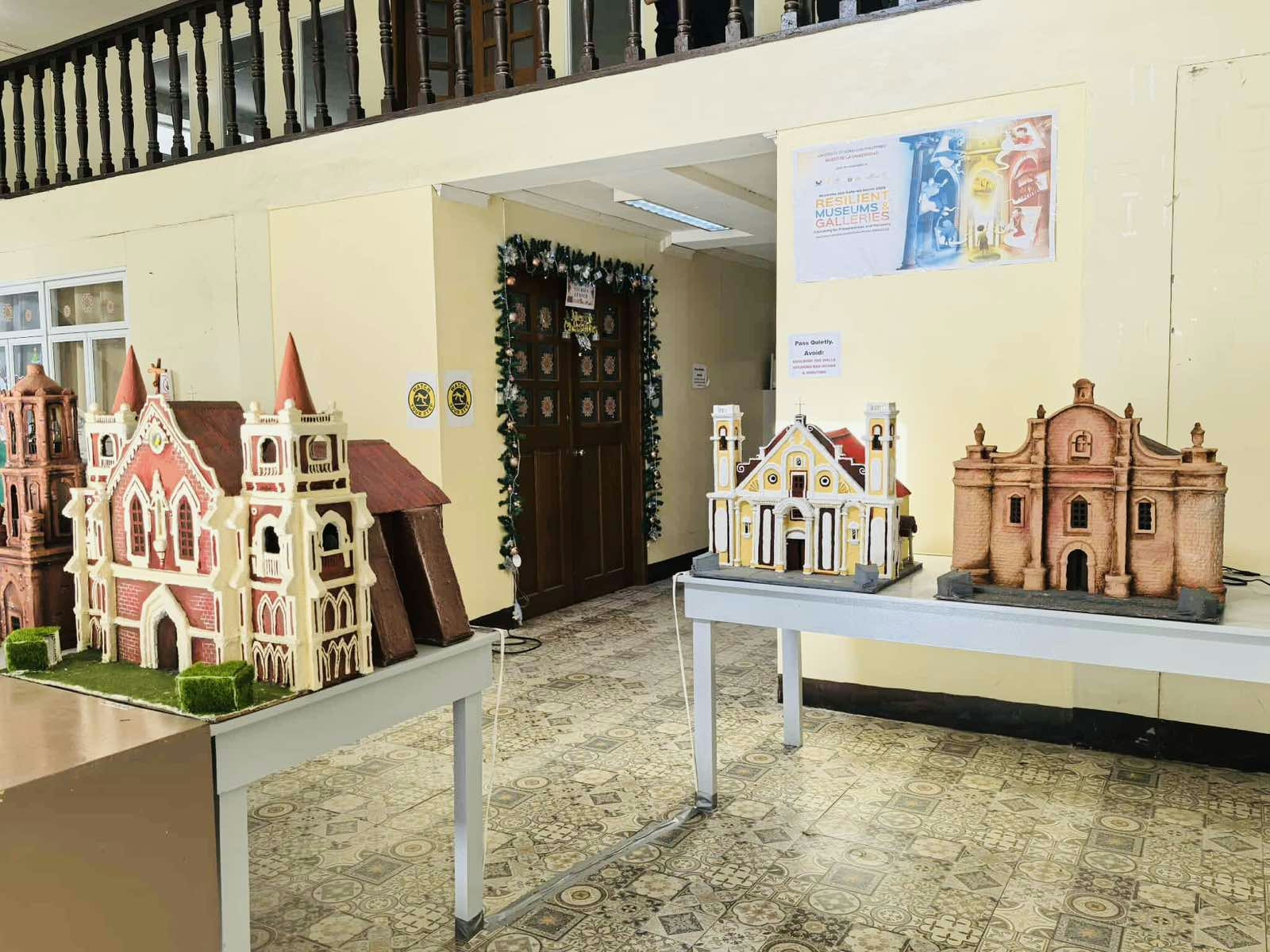
- Heritage Conservation (Tangible and Intangible)
- Heritage and Creative Industries
- Audience Reception Studies and Audiences Analyses
- Transmission Practices
- Philippine Concepts and Practices of Aesthetics
Traditional and Contemporary Forms of Artistic Expression
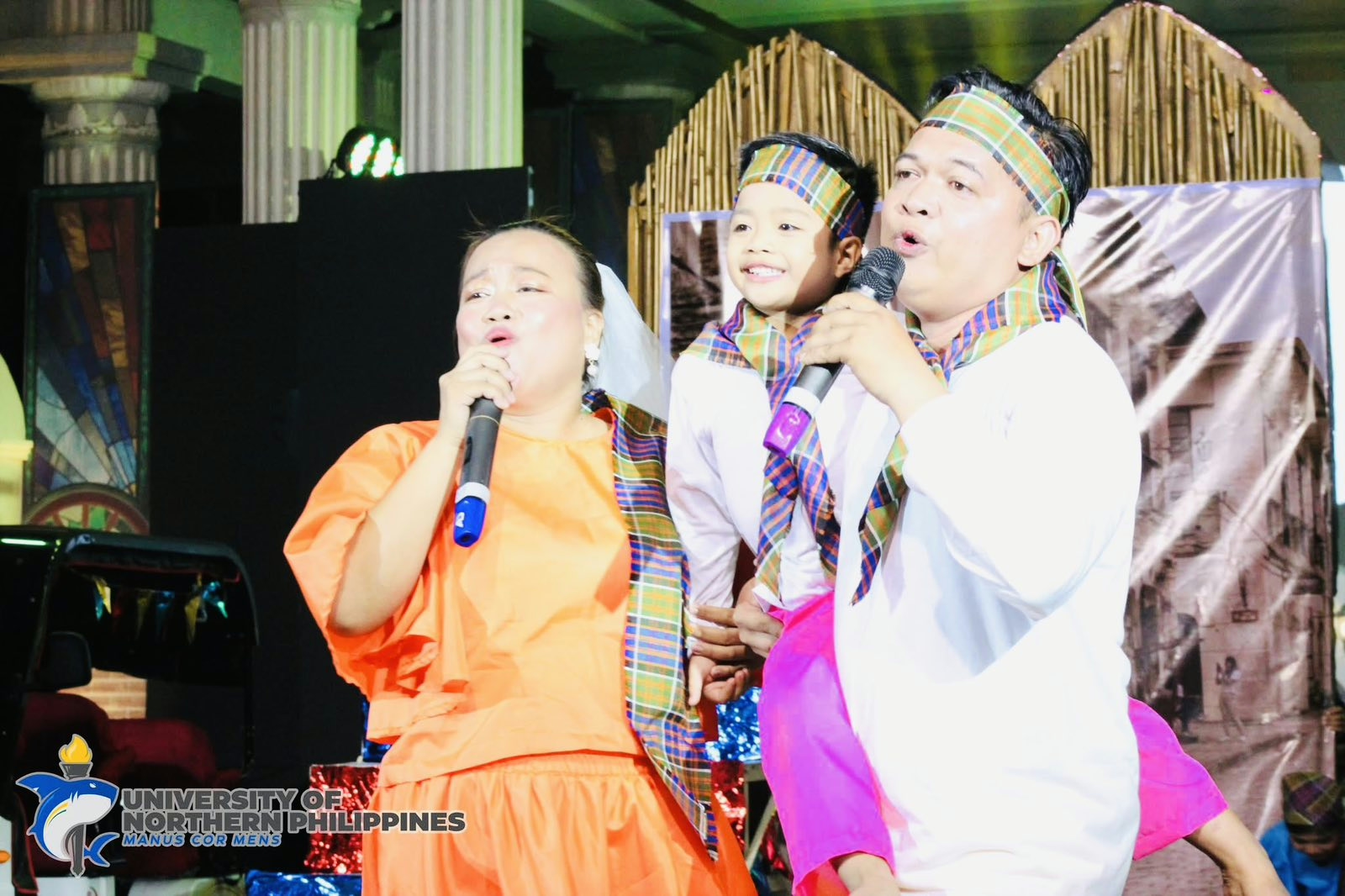
- Traditional and Contemporary Forms of Artistic Expression
- Digital Cultural Resources
- Materials, Methods and Models of Cultural Heritage Conservation
- Analysis of Government Policies and Programs for Culture and the Arts
- Culture and Arts and Disaster Risk Reduction Management
Filipinnovation in music, theater, dance, literature, performing arts (Innovation and New Technologies in the Arts)
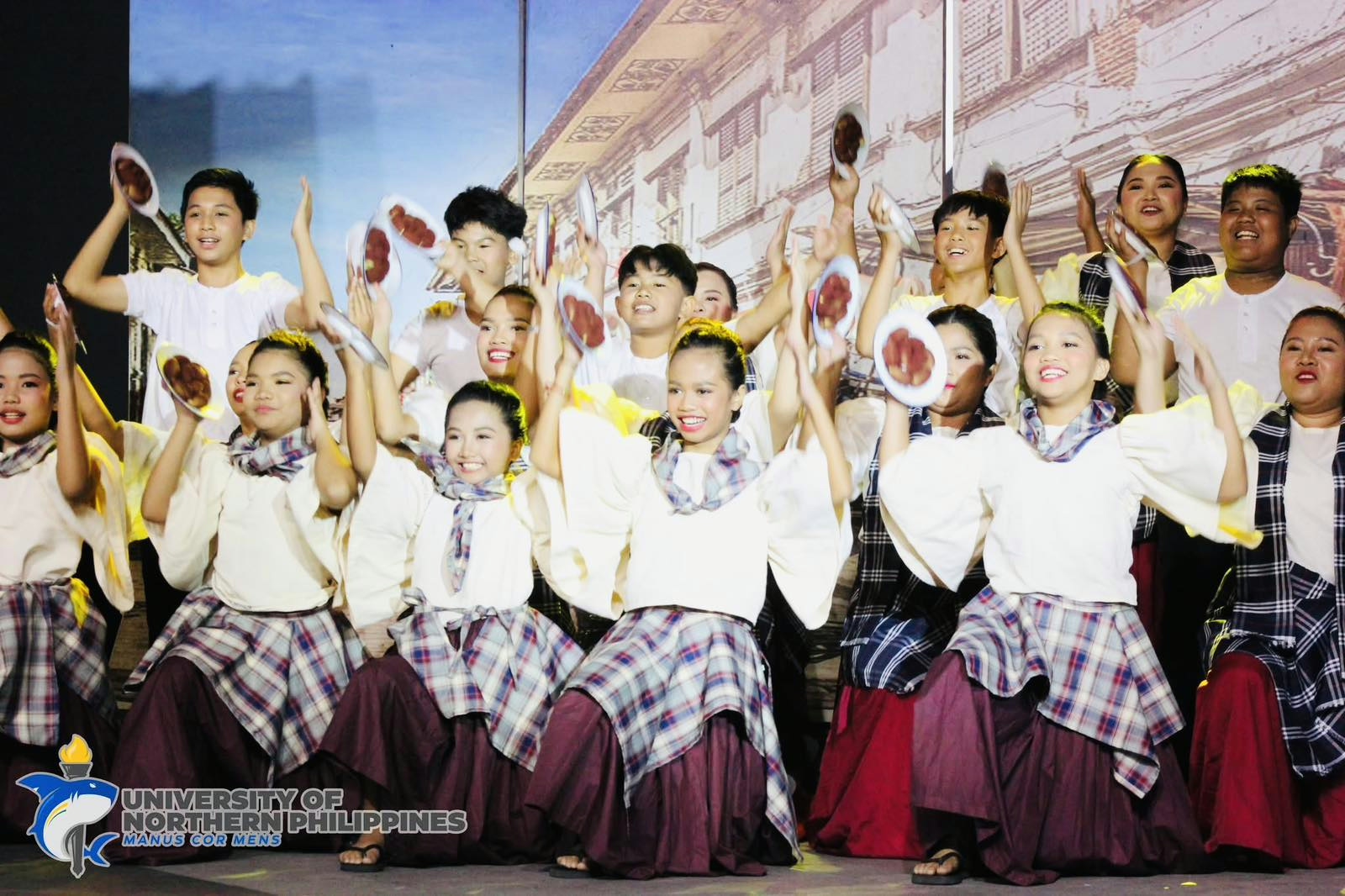
- Filipinnovation in music, theater, dance, literature, performing arts (Innovation and New Technologies in the Arts)
- Codification of endangered Philippine language
- Heritage and Arts for Tourism and Creative Traditional Industries
- Sustainable Heritage Management
Researches
Completed
- (2025) Challenges of Damili Production in Vigan City
Anita A. Arlegui, Felicitas Rizza Agam
- (2025) Bridging Culture, Driving Innovation: A Proposed Strategic Framework for Cultivating Cultural Entrepreneurship in the University of Northern Philippines
Richel Royce Chan
- (2025) Traditional Ilokano Beliefs for Good Harvest and Quality Products
Wendelyn R. Talbo
- (2025) Architectural Documentation of Built Heritage of San Vicente, Ilocos Sur
Fatima Nicetas Rabang-Alonzo, Ashey Martinez, et. al.
- (2025) Women in the Terra Cotta Industry: A Qualitative Study
Esperanza Marites Marinas, Jenny Lou Espinoza, Irene Aguilar
- (2025) The Cultural and the Language in “Muebles” Industry: Their Implications to Ilokano Personal and Communal Values
Ma. Jesusa D. Ridor-Unciano, Charito Reyno-Alconis
- (2025) Cultural Beliefs Depicted in the Song ‘Maudi a Bilin through Hermeneutic Analysis
Lester A. Aaron, Maxie C. Tolentino
(2024-2022)
- Lived Experience of Ilokanos on their Cultural Beliefs and Practices along Health during Disasters in the Unpland Municipalities of Ilocos Sur
Mark Christian R. Arizala, Sherwin V. Alvaro, Leila Sylvia F. Bautista, Maria Yolanda R. Aquino, Cathleen A. De Guzman
- Documentation of an Ilocano Dance
Mark Christian Palo, Carmela Vee F. Lim, Jenny Rose R. Ramos, Jimmy R. Donato
- INAMOYO: A Phenomenological Concept of “Community Spirit” among Ilocano Farmers
Chase Mark S. Suyat, Randolf R. Lopez, Edison Fermin A. Anyog IV
- Dulang and Beyond: The Axiological Significance of “Dulang” in the Ilokano Family
Susana T. Fagela, Gener A. Retuta, Mon-cres A. Toje, Karl Marx P. Pilar
- Moving In Unison: The Ylocos Kannawidan Street Dancing Festival
Richel Royce T. Chan
- Artes: A Celebration of Culture and Ingenuity
Richel Royce T. Chan
- Bekilokano: Batis ng Ilukong Sosyolek
Lester A. Aaron, Rosalina R. Pascua, Avelina J. Tabios
ongoing
- Understanding Beyond Reality: The Healing Force of the 3Ts (Tako, Talado, Tandok) in the Traditional Ilokano Medicine
Society V. Salcedo, Fatima Rocamora
- Cultural Practices in UNP: Basis for a Proposed Cultural Development Program
Santiago Reolalas, et. al.
- DAKLIS: A Communal Ilokano Beliefs, Practices and Values
Marites Duquinal, Imelda Nesperos
- UNP: A Critical Reflection of the Past through images and lived experiences
Karl Marx Pilar, Caesar Ziggy Perlas
- Sab-ong: Annong ni Manong Wenno Sabong ni Ayat (“The Role of Dowry in Filipino Wedding Traditions”)
Wendelyn Talbo, Wilma Tabunan, Fely de Guzman
- “NAKEM” as Ilokano Expressions of Being and Doing: An Hermeneutic Cultural Phenomenology
Benjie N. Gapate, Jedu A. Arcania, Francis Lois A. Arcania, Mariano Avila
- Documentation and Analysis of Lablabaan Dance: Basis for the Development of Dance Literature
Mark Christian Palo, Jenny Rose Ramos, Carmela Vee Lim, Jimmy Donato
- Explicating The Culinary Heritage Significance of Pipian in Vigan City, Ilocos Sur
Rogelio D. Quario II, Dave Angelo R. Asuncion, Kevin Cesar T. Martinez, Jame Monren Mercado
- Tracing Roots: The Historical Origins and Cultural Significance of Surnames in Ilocos Sur
Richel Royce T. Chan, Bonna Mae S. Gorospe
- Framework for a Sustainable Tourism in Daligan Countryside, Sta Cruz, Ilocos Sur: A Synergy of Interpretive Planning and Regenerative Tourism
Ludivina A. Lozano
- Community Risk Assessment on the Environmental Hazards of Urban Heat, Heat Flooding and Riverine Pollution in Vigan City
Fatima Nicetas R. Alonzo et al.
- Pinnadigo as Being-With-Others: An Existential Phenomenological Inquiry into Ilocano Food Sharing
Simeon B. Abarquez IV, Chase Mark Suyat, Froilan Unciano, Winston Padre
- Ethnomathematics of Burnay Making: Basis for Instructional Material Development
Mariquit Obrero, Mario Obrero, Mary Loreen Cayabyab, Mark Jhay Benitez
- Cultural Awareness of the Different Generational Groups: Understanding the Depth of Knowledge on Culture for Instruction
Ma. Jesusa Unciano, Marites Duquinal, Imelda Nesperos
- Rupa ken ti Kaunggan ni Ilokano: A Contradistinction on Levinas “Ethics of the Face”
Lloyd A. Mata, Aldrin S. Jaramilla
- Beliefs and Practices of Itnegs on Pregnancy, Postpartum and Infant Care
Jevie A. Abella, Cherry B. Banilad, Cathlene Joy A. de Guzman
- Cultural Mapping of Movable Contents of Built Heritage n San Vicente, Ilocos Sur
Ashley Martinez, et. al.
- Innovative ABEL Research and Development (InABEL) Project
Randolf M. Agup, et al.
- Socio-Economic Profiling of Weaving Industry in Ilocos Sur
Randolf M. Agup, et al.
- Characterized of Abel Products I Ilocos Sur
Randolf M. Agup, et al.
- Development of E-Profile of the Weaving Industry of locos Sur (2026)
Randolf M. Agup, et al.
- Development of Innovative Abel Iloko Patterns and Designs (2026)
Randolf M. Agup, et al.
ISC SERVICES AND ACTIVITIES
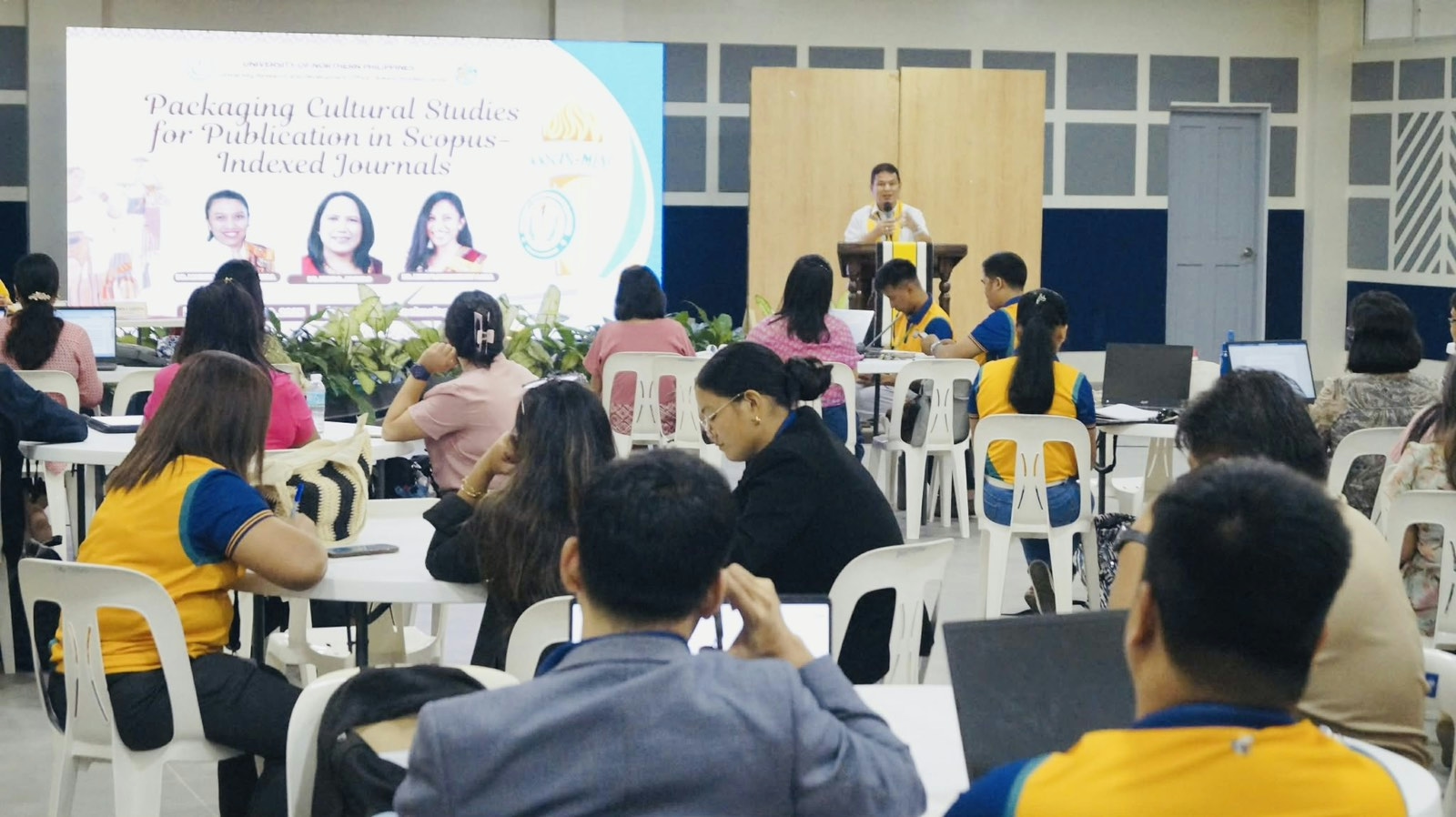
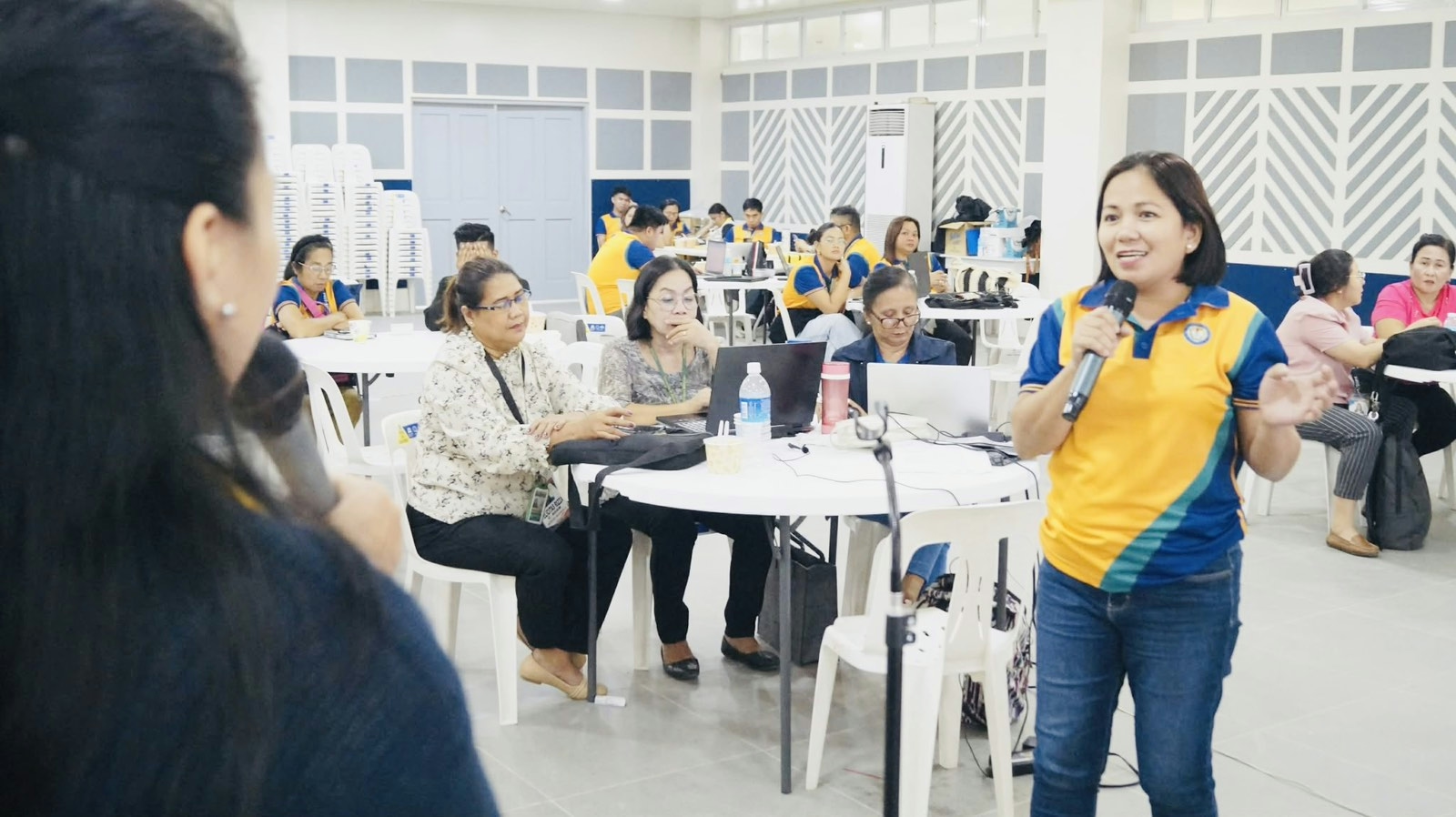
Research Training Program
The activity aims to provide participants with the knowledge and skills necessary to prepare, refine, and publish their cultural studies in internationally recognized and indexed journals such as Scopus. At present, research outputs on Ilokano cultural studies remain limited in terms of international visibility and academic impact. While valuable scholarship is being produced locally and nationally, much of it remains unpublished, under-disseminated, or confined to local circulation with limited reach. This underrepresentation restricts opportunities for global scholarly exchange, policy influence, and the recognition of indigenous knowledge systems. Barriers such as insufficient training in academic writing, unfamiliarity with international publication standards, and limited access to publishing networks continue to hinder llokano scholars from engaging fully in global research landscapes.
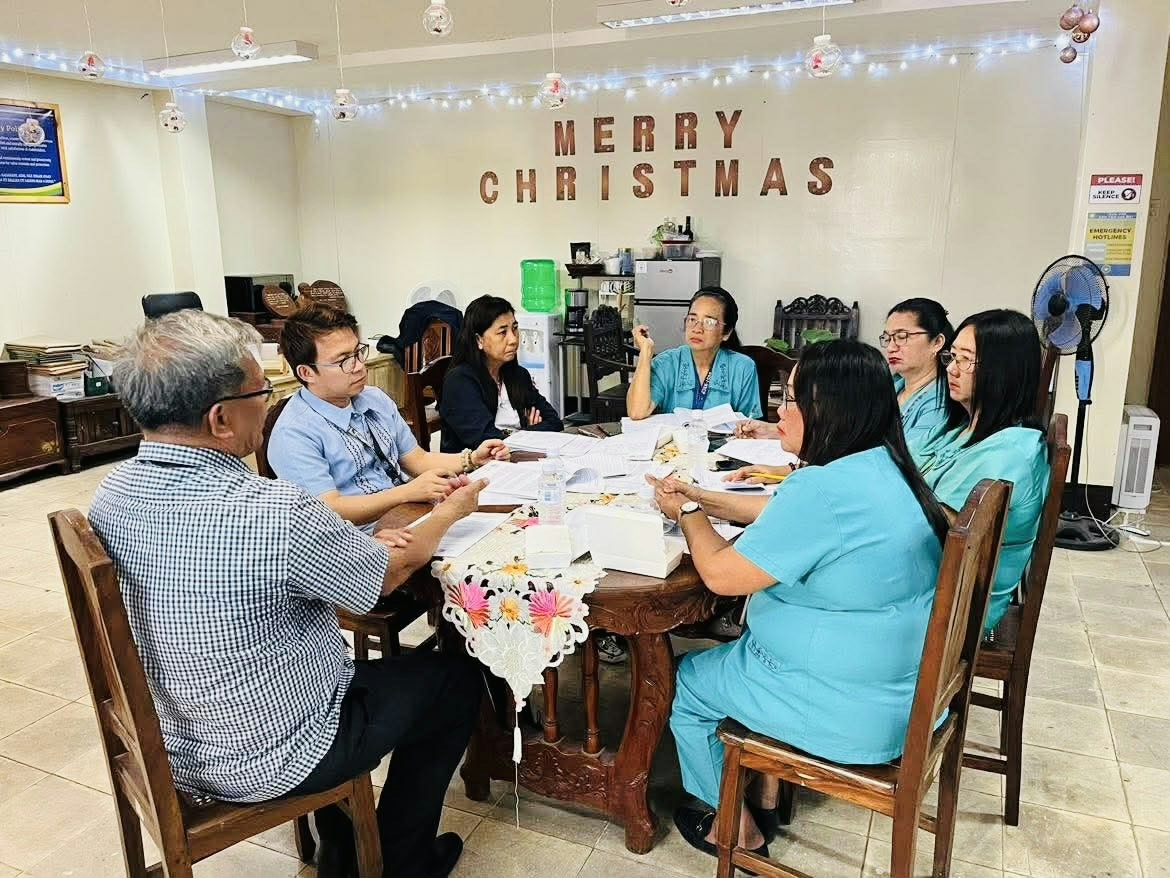
In-House Review of Research Proposal and Completed Research
The in-house review is a systematic evaluation process conducted to assess the quality, relevance, and impact of culture and heritage research studies produced by faculty researchers. This ensures that culture and heritage research outputs align with institutional R & D goals, academic standards, and ethical guidelines. It also a way to provide constructive feedback, enhance the rigor of cultural research studies, and foster a culture of scholarly excellence. It also serves as a preparatory stage for presentations, publications, or funding applications, ensuring that the research is credible, well-structured, and contributes meaningfully to the academic community.
Mentoring and Workshop of Research for Cultural and Heritage Studies
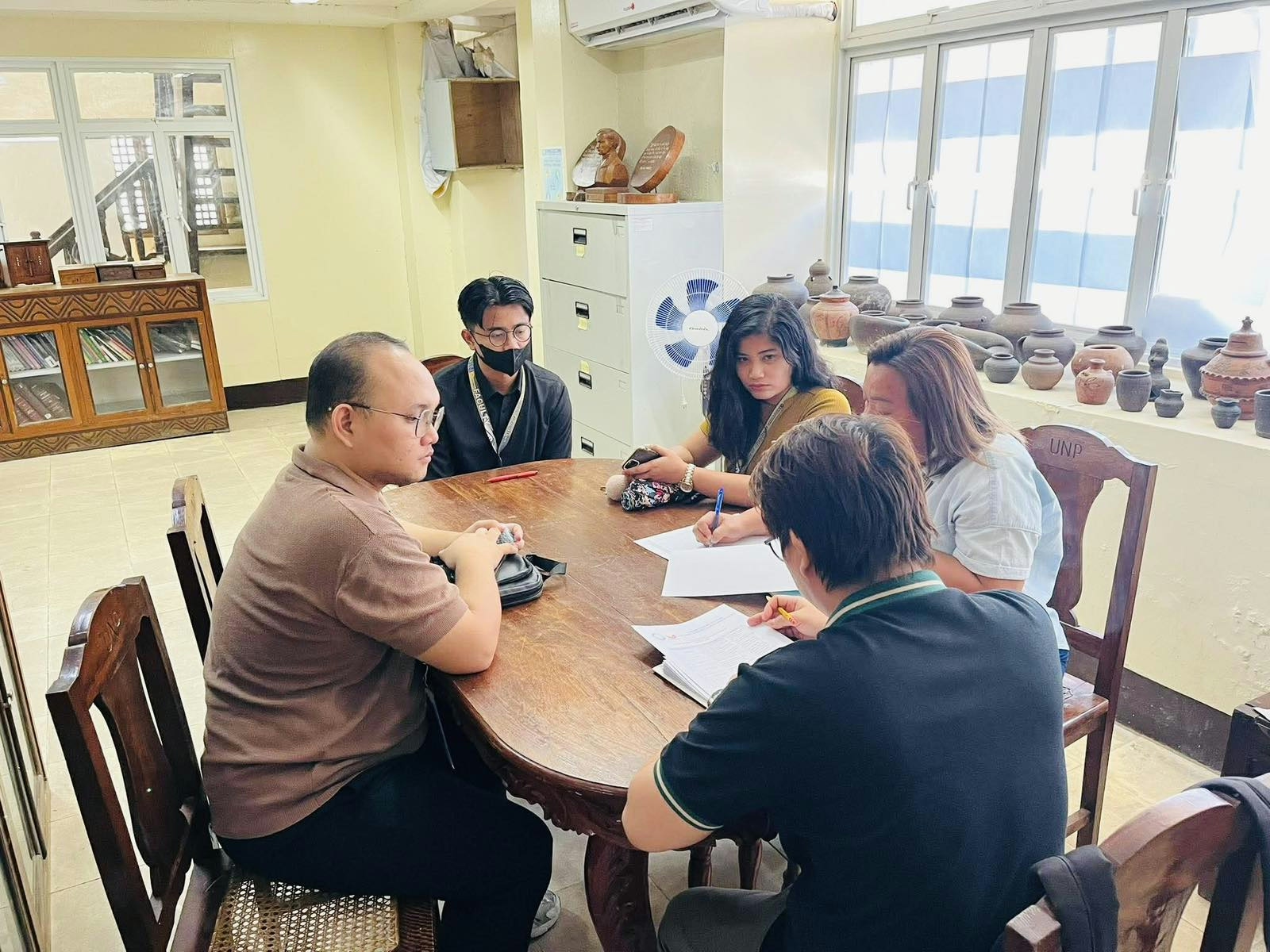
This mentoring activity aims to equip the researchers with tips on presenting the findings, conclusions, and recommendations of their completed study comprehensively and coherently. Furthermore, it shall provide an opportunity for the researchers to discuss improving the final manuscript of the research with the Chief/Coordinator of the Ilokano Studies Center.
Cultural Immersion Activities
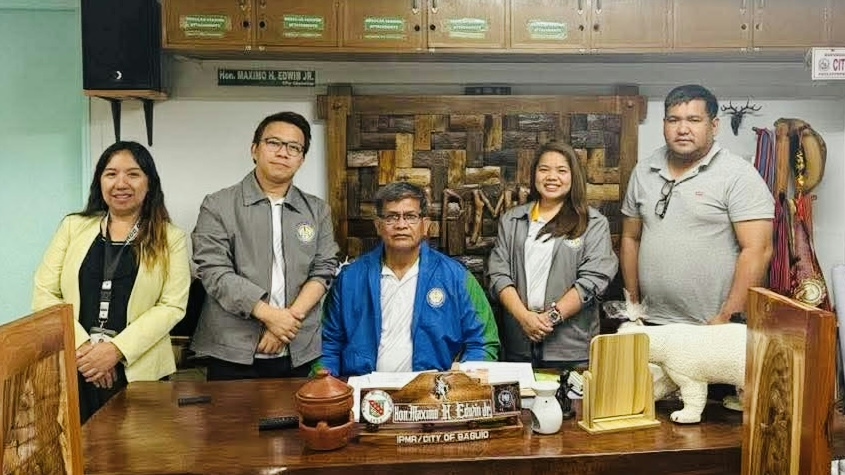
This benchmarking activity aims to observe, analyze, and integrate innovative strategies that will enhance our cultural research programs at the University. Baguio City’s recognition as a UNESCO Creative City underscores its leadership in cultural preservation and artistic innovation, making it an ideal model for fostering research excellence in the field.