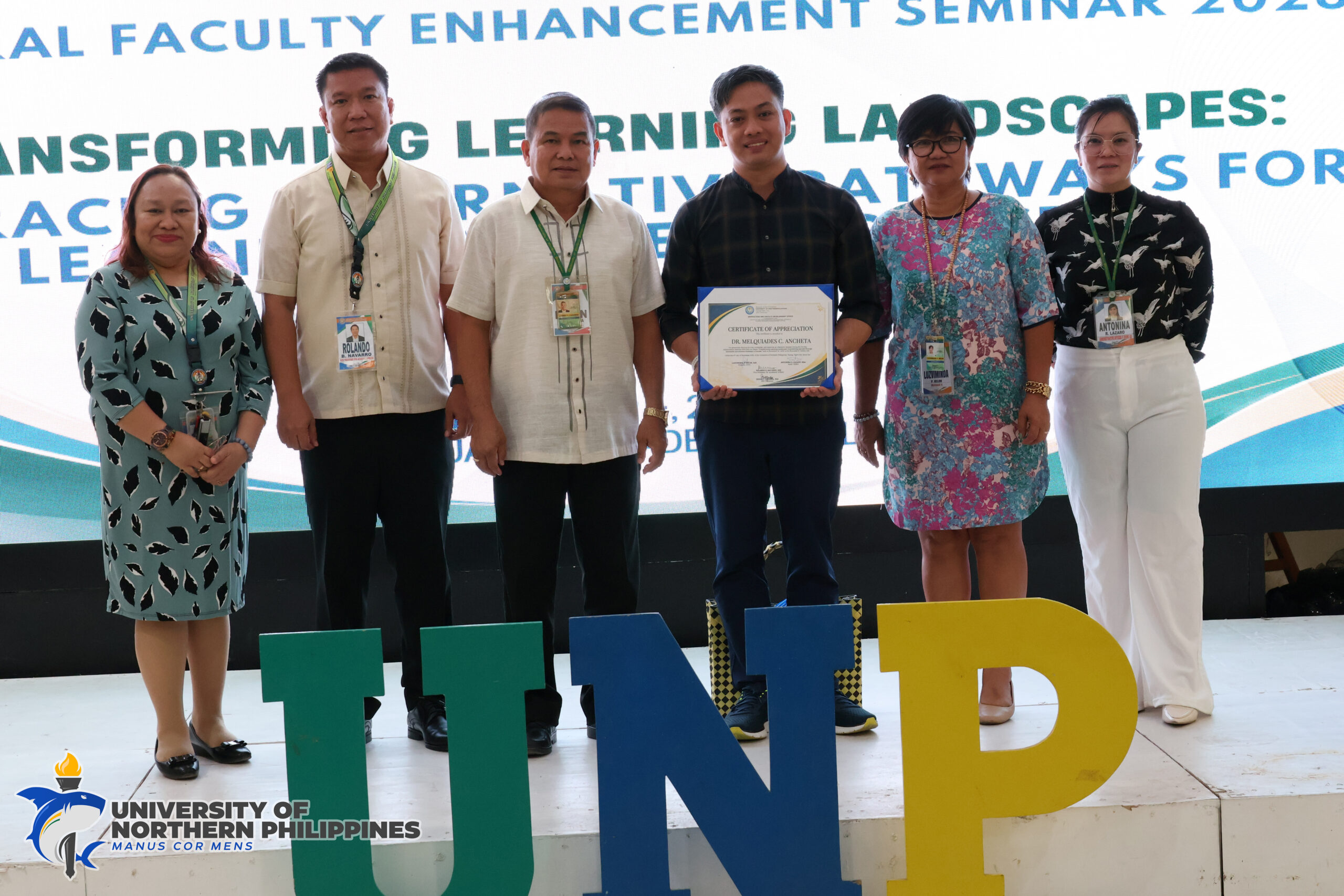
Strengthening its commitment to continuous professional development and academic excellence, the University of Northern Philippines conducted the General Faculty Enhancement Seminar 2026 on November 4 at the UNP-Tadena Hall.
Carrying the theme, “Transforming Learning Landscapes: Embracing Alternative Pathways for Student Success,” the seminar highlighted the importance of rethinking traditional approaches to education and embracing innovative, flexible, and inclusive learning pathways that respond to the diverse needs of students and provide broader opportunities for academic achievement and lifelong learning.
Spearheaded by the Office of the Vice President for Academic Affairs, in collaboration with the Instruction and Faculty Development Office, Human Resource Management Office, and UNP Faculty Union, the seminar gathered faculty members of the University for a comprehensive professional development engagement. The initiative provided a platform to strengthen faculty competencies, update instructional knowledge and practices, and equip educators with relevant skills and insights to respond effectively to the evolving demands of higher education.
The seminar featured a five-part program led by resource speakers from the University and the Commission on Higher Education Regional Office I, providing faculty members with valuable insights into key priorities and emerging demands in higher education. Among the speakers was Dr. Rolando Navarro, Vice President for Academic Affairs, who emphasized the need to pursue and sustain excellence in higher education through quality academic delivery and continuous institutional improvement. His presentation examined the vital responsibilities of faculty members in the University’s three core functions—instruction, research, and extension—and highlighted their significant contribution in advancing academic standards, generating knowledge, and delivering meaningful services to communities.
A significant highlight of the seminar was the presentation of Dr. Melquiades Ancheta, Chief Education Program Specialist of the Non-Conventional Higher Education Division of the Commission on Higher Education Regional Office I, who provided an in-depth discussion of the legal and policy frameworks governing non-conventional higher education and inclusive education. He also explored the growing relevance of micro-credentials, lifelong learning, and career-aligned educational opportunities, emphasizing the need for higher education institutions to adopt flexible and responsive learning pathways that address the diverse needs of learners and the changing demands of the workforce.
The afternoon sessions shifted the focus to institutional performance, professional accountability, and student-centered education. Ms. Rizza Cajindos, Director of the University Planning and Development Office, revisited the roles, responsibilities, and commitments of faculty members and their immediate supervisors in performance management and career development. Her discussion highlighted the importance of shared accountability, effective performance evaluation, and sustained professional growth in achieving individual and institutional goals.
Complementing these discussions, Dr. Precious Lyn Babida, Assistant Head of the Admission Services Office, emphasized the need to place students’ needs, welfare, and mental health at the center of academic policies and instructional practices. She highlighted the responsibility of educators to cultivate inclusive, supportive, and responsive learning environments where students are valued, their well-being is protected, and their diverse circumstances are considered. Such an approach, she stressed, is essential to broaden access to educational opportunities, strengthen student engagement, and create conditions that enable every learner to succeed.
Through the seminar, the University reinforced its commitment to develop a competent, adaptable, and future-ready faculty workforce capable of responding to the changing landscape of higher education. By equipping educators with innovative perspectives and practical strategies in non-conventional education, the initiative sought to promote flexible, inclusive, and learner-centered approaches that address diverse educational needs and expand opportunities for meaningful learning. The undertaking also advanced the principles of United Nations Sustainable Development Goal 4 (SDG 4)—Quality Education, particularly the promotion of equitable and inclusive learning opportunities and the continuous professional development of educators as essential drivers of accessible, relevant, and high-quality education.
The seminar culminated in an open forum that provided faculty members and resource speakers an opportunity to exchange views, raise relevant questions, and share insights on the challenges, emerging trends, and opportunities explored throughout the sessions. The interactive discussion further enriched the learning experience by encouraging the exchange of perspectives and reinforcing the importance of collective efforts in addressing the evolving needs of higher education. Through this initiative, UNP reaffirmed its commitment to sustained faculty capacity-building, continuous professional growth, and the delivery of inclusive, flexible, and quality education responsive to the demands of a changing academic landscape.
Article by: Lester Aaron