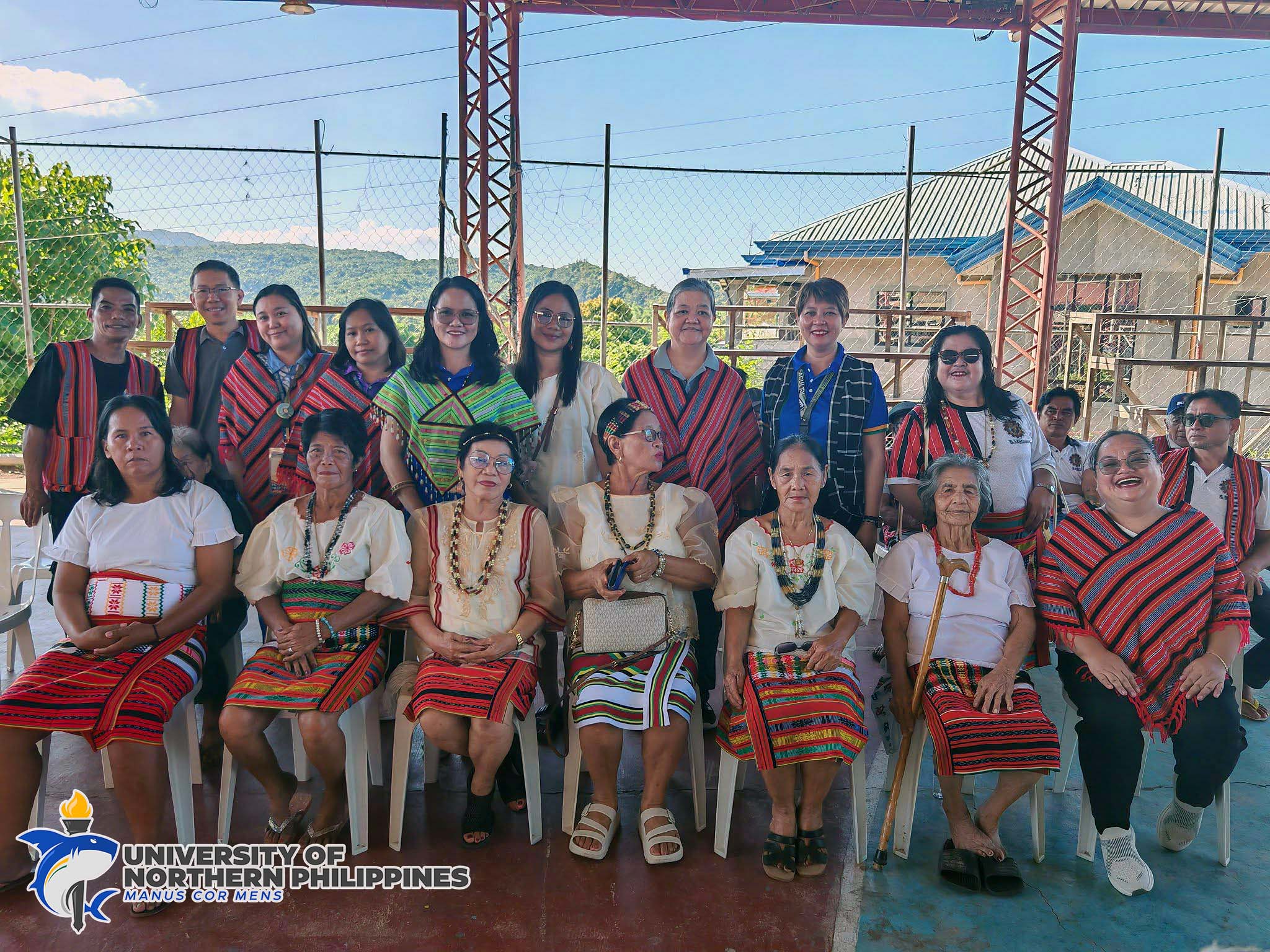
Reinforcing its commitment to human rights education, inclusive community development, and the preservation of Indigenous cultural heritage, the University of Northern Philippines, in partnership with the Commission on Human Rights–Region 1 (CHR-R1), conducted a two-day training workshop for the Indigenous Peoples (IPs) of Sarmingan, Narvacan, Ilocos Sur, on October 29–30, 2026 as part of the nationwide observance of Indigenous Peoples Month.
Guided by the theme, “Honoring roots, building futures: Empowering Indigenous Peoples communities,” the initiative gathered 50 participants, including Kankanaey community elders, tribal leaders, barangay officials, and local residents, to deepen their understanding of fundamental human rights, particularly the rights and protections afforded to Indigenous Peoples. The training also featured discussions on gender and development, recognizing the importance of ensuring equal opportunities, inclusive participation, and respect for the rights of all members of the community.
Beyond providing essential knowledge on human rights, the workshop created an avenue for dialogue between Indigenous community members, government representatives, legal practitioners, and academic institutions. It enabled participants to raise concerns about the protection of their cultural identity, the recognition of their customary practices, and the preservation of traditional systems that continue to shape community life.
Leading the UNP delegation was Dr. Fatima Rocamora, Vice President for Research and Extension and Coordinator of the Center for Human Rights Education–Ilocos Sur under CHR-R1, who represented University President Dr. Erwin Cadorna. Representing the Commission was Atty. Melanie William, who headed the CHR-R1 team on behalf of Regional Director Atty. Harold Kub-aron.
The CHR-R1 legal team also included Atty. Anna Leah Romero, Atty. Arlene Ven, Atty. Yolanda Salanga, and Atty. John Kenneth Quiñones, whose participation provided the community with opportunities to raise legal questions and seek guidance on matters concerning Indigenous rights and customary justice systems.
Also representing the University were Dr. Dolores Bersamina, Dean of the College of Open and Distance Education, and Dr. Society Salcedo, Assistant Head of the Museo de la Unibersidad and an accredited human rights volunteer educator. Their involvement reflected the University’s collaborative approach to deliver community-based education by drawing on its institutional expertise in research and extension, academic affairs, cultural heritage, and open and distance learning.
A particularly significant component of the workshop was the discussion on the community’s indigenous justice system, particularly its traditional use of the lipitan, a disciplinary tool employed as part of customary mechanisms for maintaining order and addressing concerns within the community.
During the open forum, Mr. Henry Natividad, Indigenous Peoples Mandatory Representative (IPMR) of Sarmingan, brought before the CHR-R1 legal team concerns regarding the possible codification of their indigenous justice system, particularly the customary practices involving the lipitan. His inquiry opened an important discussion on the legal considerations involved in documenting and recognizing traditional systems of justice while ensuring that these are understood within the framework of existing laws and the rights of Indigenous Peoples.
The discussion highlighted the importance of preserving customary practices as part of the community’s cultural identity while providing Indigenous leaders with appropriate legal guidance on their recognition, documentation, and application. It also demonstrated the value of creating spaces where Indigenous community representatives can directly communicate their concerns to legal experts and concerned institutions.
Meanwhile, Punong Barangay Julie Langiden expressed appreciation for the University’s and the Commission’s presence in Sarmingan, conveying the community’s desire for continued engagement and assistance, particularly in strengthening and recognizing its traditional “lipit” system.
He expressed this aspiration, saying, “Sapay koma ta agsublikayto pay nga umay mangiyadal ken mangtulong kadakami nangnangruna ti pannakaipapel daytoy Lipit system-mi ditoy Sarmingan,” emphasizing hope that the institutions would return to provide further learning opportunities and assistance, especially concerning the place and recognition of their customary disciplinary system in the community.
His message reflected the community’s appreciation of initiatives that bring legal knowledge and institutional support directly to Indigenous Peoples, particularly those seeking to preserve traditional practices while navigating contemporary legal and governance frameworks.
The two-day undertaking was spearheaded by the UNP Office of the Vice President for Research and Extension, with collaborative support from the Office of the Vice President for Academic Affairs, Museo de la Unibersidad, and the College of Open and Distance Education. This inter-office collaboration demonstrated the University’s capacity to mobilize its academic, research, extension, and cultural resources in responding to the specific needs of local communities.
The partnership with CHR-R1 further strengthened the educational and legal dimensions of the initiative, bringing together the University’s expertise in community engagement and human rights education with the Commission’s mandate to promote and protect human rights. Through the participation of its legal team, the Commission provided an important platform for discussing the rights of Indigenous Peoples and addressing concerns that directly affect their community life and cultural practices.
More importantly, the activity recognized that empowering Indigenous communities entails more than introducing them to existing laws and human rights principles. It also requires listening to their experiences, understanding their customary institutions, recognizing their cultural heritage, and ensuring that their perspectives are considered in discussions and decisions affecting their communities. By engaging elders, tribal leaders, local officials, and residents, the training encouraged a participatory approach to human rights education that values Indigenous knowledge and community experience.
The initiative also advances the University’s institutional development priorities, particularly Goal 4: Deliver community services that address local needs and remain sustainable; Goal 5: Extend the University’s reach beyond borders; Goal 10: Integrate gender and development across university activities; and Goal 11: Safeguard and advance cultural heritage.
These goals reflect UNP’s continuing commitment to make higher education responsive to the needs of society, extend the benefits of academic knowledge beyond the campus, promote gender equality, and protect the cultural heritage of communities. The engagement in Sarmingan exemplifies how university-led extension initiatives can serve as meaningful instruments in advancing human rights awareness, strengthening community capacities, and promoting respect for cultural diversity.
Through its continuing partnership with CHR-R1, the University reinforces its role as an active partner in building communities that are informed of their rights, confident in protecting their cultural identity, and empowered to participate in matters concerning their welfare and development. The undertaking also affirms that cultural preservation and human rights protection must go hand in hand, ensuring that Indigenous traditions are respected and that the communities who sustain them have the knowledge, recognition, and support necessary to carry their heritage forward.
Ultimately, the training served as a meaningful step toward strengthening the relationship between academic institutions and Indigenous communities—one that places human dignity, cultural identity, and community empowerment at the center of sustainable development.