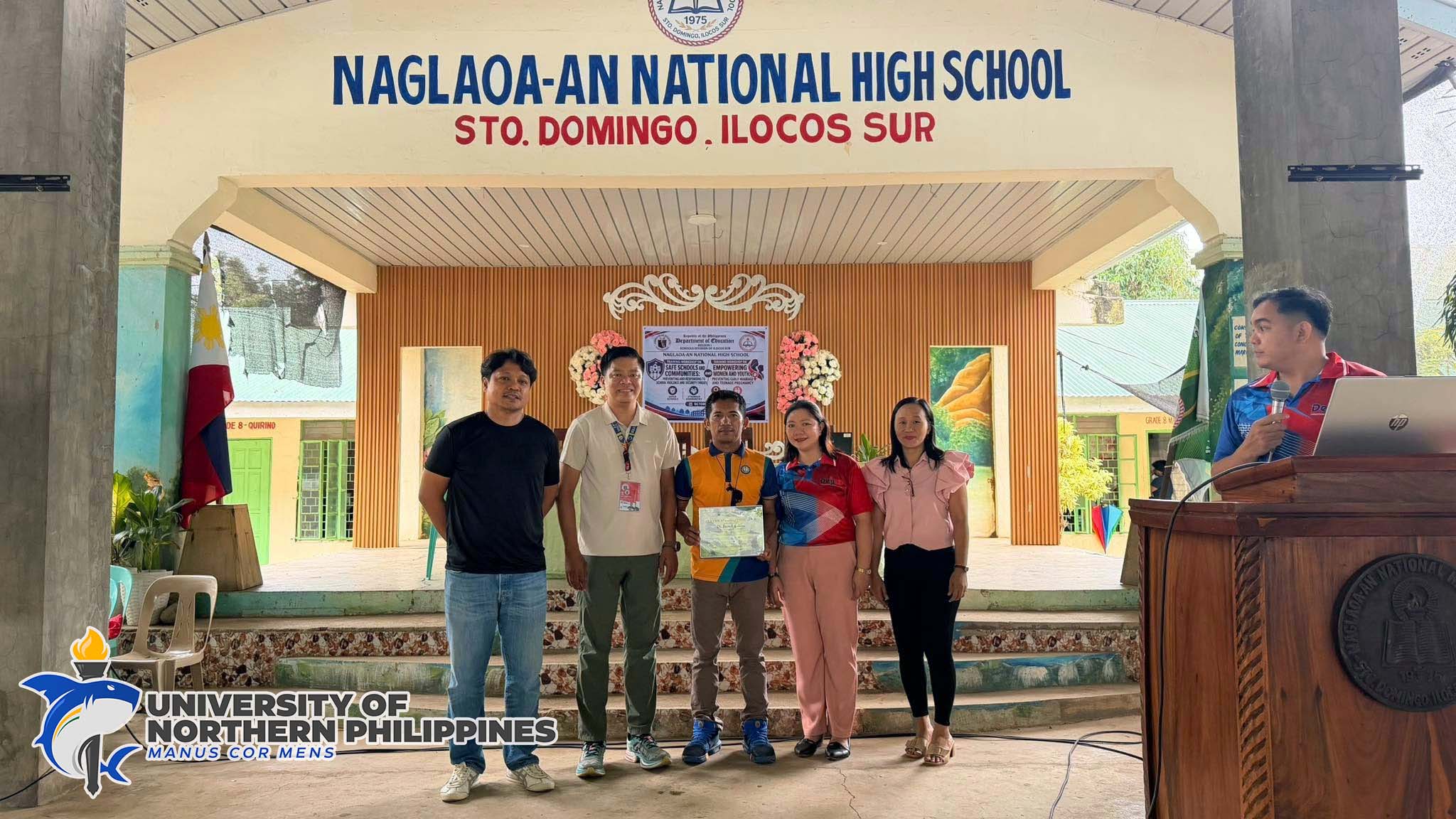
Strengthening community awareness and promoting safer environments for women, youth, and students, the College of Open and Distance Education (CODE) of the University of Northern Philippines (UNP), in partnership with the Local Government Unit of Sto. Domingo, Ilocos Sur, conducted two community-based training-workshops on October 23, 2026, at Naglaoa-an National High School.
The initiatives addressed the prevention of early marriage and teenage pregnancy while equipping communities with greater awareness and strategies to prevent school violence and security threats.
The first training-workshop, Empowering women and youth: Preventing early marriage and teenage pregnancy, centered on equipping participants with the knowledge and life skills necessary to address the social and personal challenges associated with early marriage and teenage pregnancy. It emphasized the importance of understanding the potential consequences of these issues and promoting informed decision-making to protect the rights, health, and overall well-being of young people. By encouraging greater awareness and responsible choices, the activity sought to help women and youth recognize the value of education, personal development, and planning for their futures.
Mr. Jay Ar Joshua Tolentino, a Master of Arts in Social Work student and CODE Extension Coordinator, served as resource person and facilitated the learning session. He emphasized the need to empower women and young people with relevant information, practical life skills, and a stronger sense of responsibility to enable them to make sound decisions about their lives and aspirations. The session also highlighted how access to appropriate guidance and knowledge can help young people pursue their educational goals, explore opportunities for personal growth, and become active contributors to their families and communities.
Meanwhile, the training-workshop on Safe schools and communities: Preventing and responding to school violence and security threats focused on strengthening the capacity of school stakeholders to identify potential threats, prevent violence, and respond effectively to security incidents within educational institutions and their surrounding communities. The activity highlighted the need for a coordinated, multisectoral approach to safeguard learners and school personnel, emphasizing the shared responsibility of educational institutions, law enforcement agencies, and disaster risk reduction and management offices in maintaining safe and secure learning environments.
Contributing to the workshop’s discussions and practical learning sessions were personnel from the Sto. Domingo Municipal Police Station, headed by PLT Victorino Harold Baquirin, Officer-in-Charge, and the Municipal Disaster Risk Reduction and Management Council, headed by Ms. Cecilia De Vera, Local Disaster Risk Reduction and Management Officer, and represented by Mr. Jeremy De Guzman.
Their participation reinforced the importance of inter-agency cooperation in raising security awareness, promoting timely and appropriate incident reporting, recognizing potential risks, and establishing effective response measures for school violence, security threats, and emergencies. Through this collaborative initiative, the workshop sought to enhance stakeholders’ preparedness and strengthen collective efforts to protect the school community and promote a safer, more secure environment for learning.
Collectively, the two training-workshops highlighted the vital role of community-based education in addressing social concerns that directly affect the safety, development, and well-being of women, youth, and the broader school community. By equipping participants with practical knowledge, encouraging informed and responsible decision-making, and strengthening collaboration among educational institutions, local government units, law enforcement agencies, and disaster risk reduction and management offices, the initiatives promoted a proactive and collaborative approach to prevent social risks, addressing security concerns, and protecting vulnerable sectors. These efforts also reinforced the importance of shared responsibility in building safer, more inclusive, and resilient communities.
The activities form part of the continuing extension initiatives of the College of Open and Distance Education under its TARABAY Extension Banner Program, particularly the TARABAY–NAINGAT Project (Community Safety and Crime Prevention). Through this initiative, CODE advances community safety and social empowerment by delivering responsive extension services and strengthening partnerships with local institutions and stakeholders to address pressing community concerns.
Through these community-based interventions, the University of Northern Philippines, through CODE, continues to translate academic knowledge and professional expertise into practical solutions that respond to the needs of its partner communities. Its collaboration with the local government unit of Sto. Domingo and the school community reflects the university’s commitment to empower women and youth, promote safe and secure learning environments, and strengthen community capacity to prevent risks and respond to emerging challenges. Ultimately, these initiatives seek to cultivate informed, prepared, and engaged communities where collective action contributes to the protection and well-being of all.