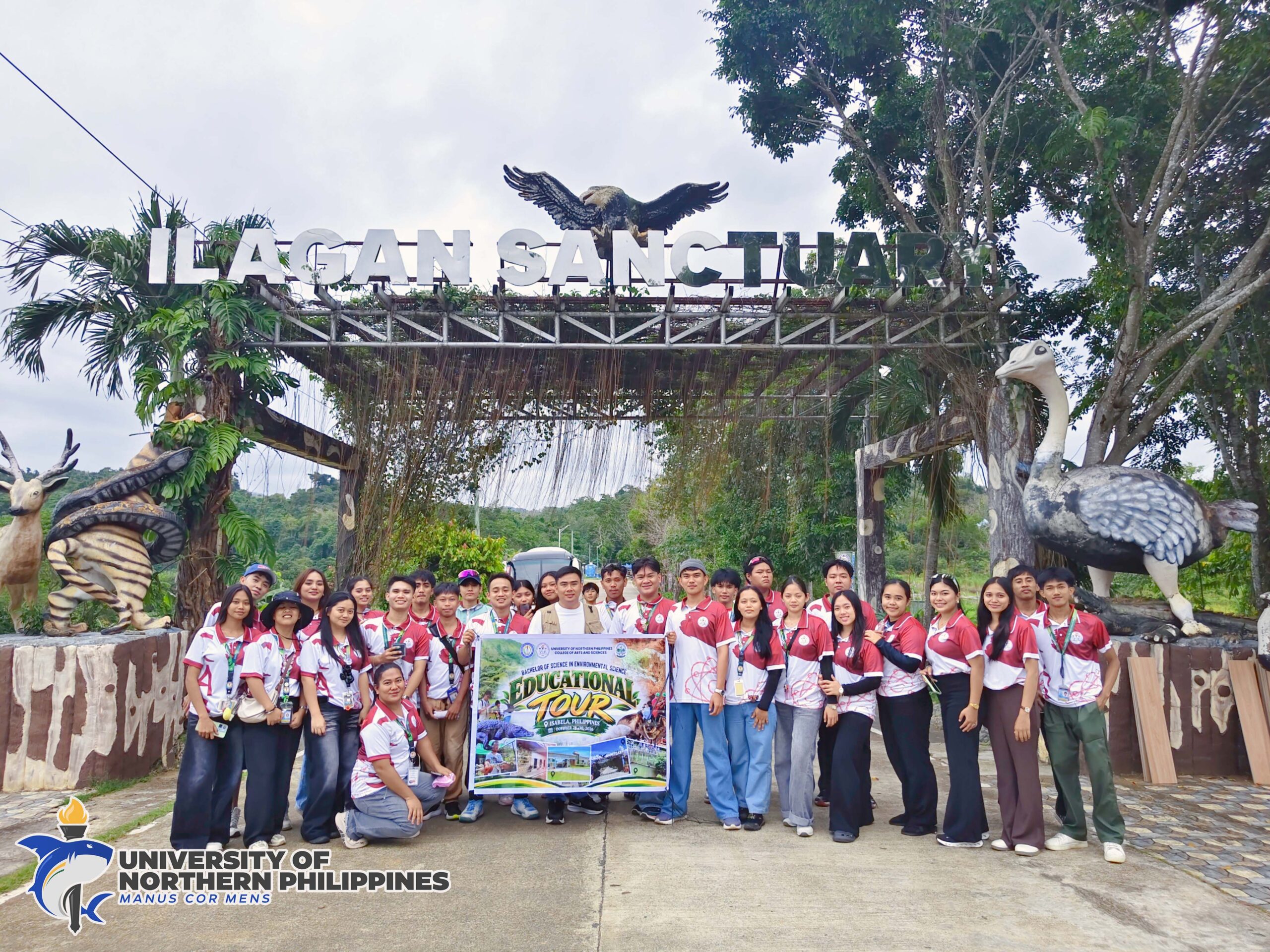
Thirty-four Bachelor of Science in Environmental Science students from the College of Arts and Sciences of the University of Northern Philippines visited environmental institutions, protected areas, and natural attractions in Isabela and Cagayan provinces during a three-day educational tour on October 28–30, 2026.
The group consisted of 18 students from Environmental Science (ENVI SCI 100) and 16 students from Introduction to Environmental Assessment (ENVI SCI 102), both classes handled by Dr. Bondee L. Peñaflor. The activity provided field-based learning opportunities to complement classroom discussions and expose students to environmental education, conservation, ecological assessment, and biodiversity.
The students first visited Isabela State University (ISU) Cabagan Campus, where they were introduced to its academic environment, facilities, and contributions to environmental education and research.
On October 29, the group proceeded to Fuyot Spring National Park (FSNP), also known as Ilagan Sanctuary, in the City of Ilagan, Isabela. Technical personnel from the Department of Environment and Natural Resources–Community Environment and Natural Resources Office (DENR-CENRO) Naguilian conducted an orientation on the protected area’s importance and conservation efforts.
Forester Maria Cristina Mediana-Ortega, Assistant Protected Area Superintendent of FSNP and Forester II at CENRO Naguilian, discussed ecological assessment and monitoring, field techniques, and the work of environmental professionals. The students also joined a guided tour facilitated by Ate Nora, an accredited tour guide, and other CENRO Naguilian field personnel assigned to the park. They explored Main Cave, Moon Cave, and Altar Cave and observed the area’s geological formations and biodiversity. Some students also trekked to Pinzal Falls, while others explored park facilities, including the cable car and zipline.
On October 30, the students visited Callao Cave in Peñablanca, Cagayan, a National Important Cultural Property recognized by the National Museum of the Philippines (NMP) for its historical significance. Although NMP personnel were unavailable during the visit, five accredited tour guides facilitated the cave exploration, allowing students to observe its geological features and learn about the importance of preserving natural and heritage sites.
The group also visited Lighthouse Cooperative, a producer of Ybanag food products, before proceeding to Linao East, Tuguegarao City, for lunch and to experience the local specialty, Pancit Batil Patong. The students then traveled back to Vigan City, Ilocos Sur, concluding the tour.
Throughout the visits, students acquired relevant information, education, and communication (IEC) materials and other knowledge products to support their continued learning. The field activities provided opportunities to connect classroom concepts with actual environmental settings and observe the work involved in environmental assessment and conservation.