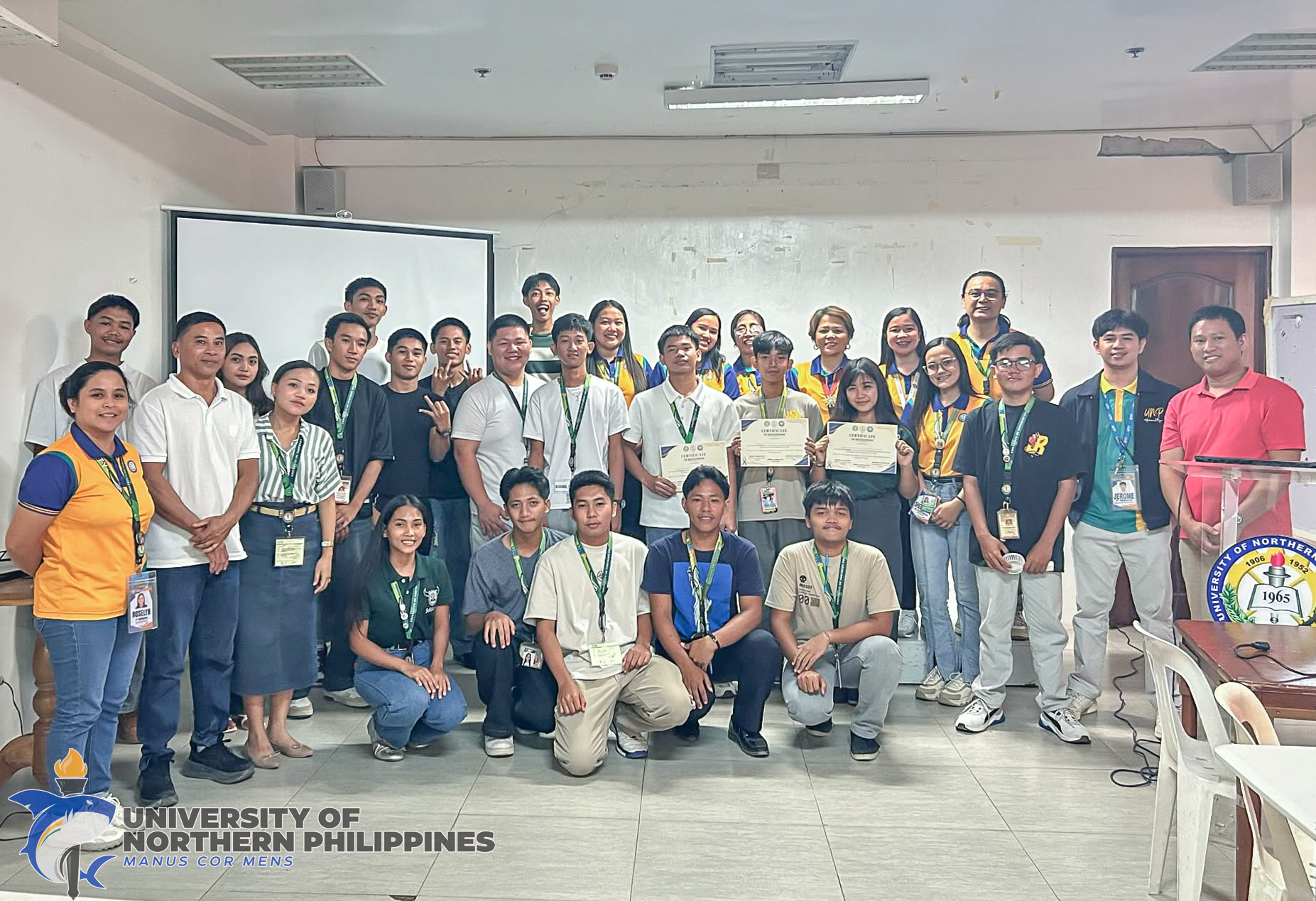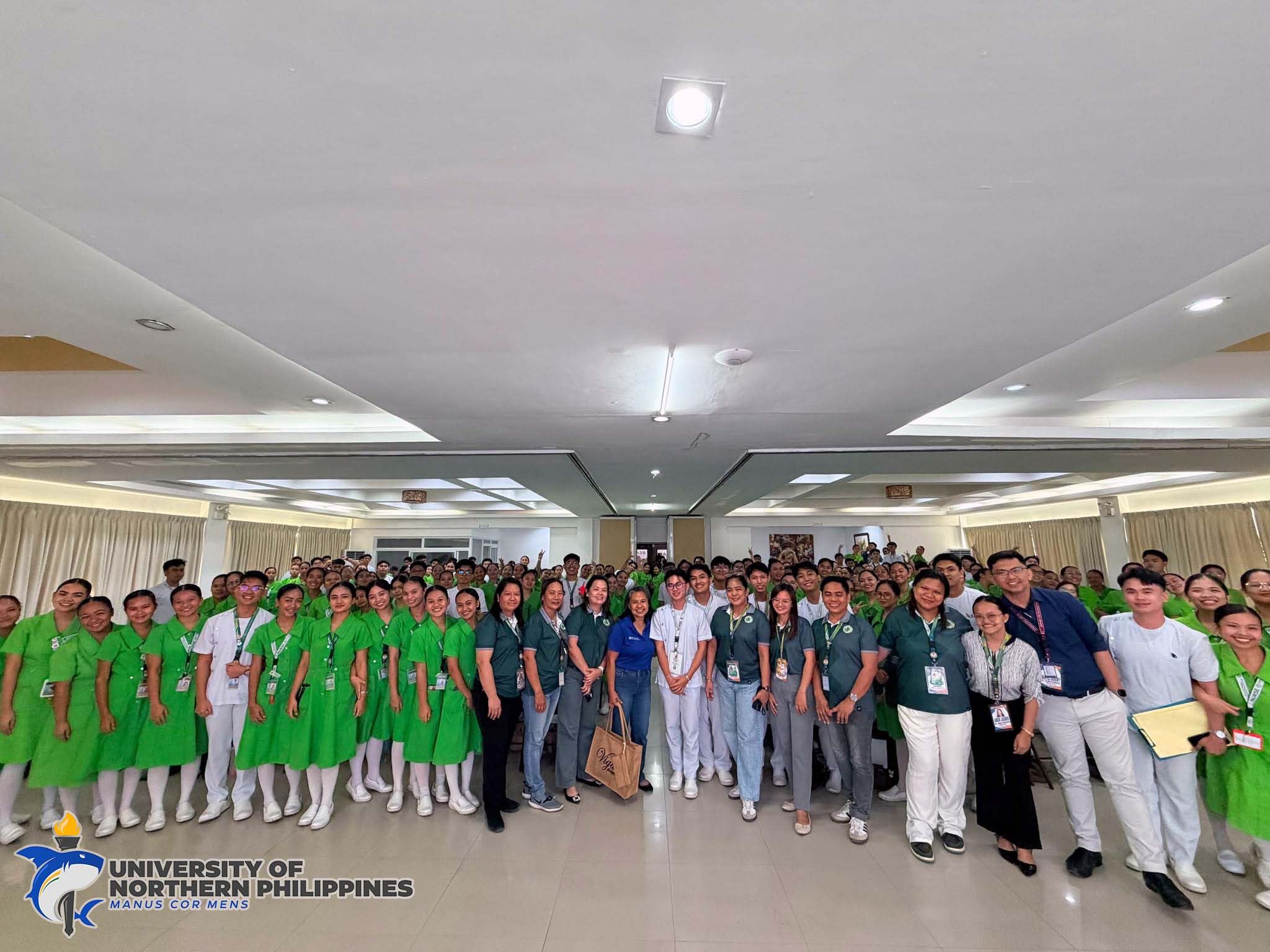
Equipping future nurses with the knowledge and clinical judgment needed in high-stakes healthcare settings, the University of Northern Philippines College of Nursing conducted a specialized learning symposium on September 23 at the 8-5 Tadena Hall.
Dubbed “Clinical readiness: Evidence-based and safe nursing care in mechanical ventilation and basic ECG interpretation,” the symposium brought clinical knowledge closer to practice, enabling nursing students to deepen their understanding, sharpen their critical-thinking skills, and strengthen their readiness to respond to complex patient-care situations.
Built around the theme “An alumni–student clinical learning initiative on evidence-based and safe Nursing care,” the symposium brought Level IV nursing students face-to-face with clinical instructors, faculty members, and distinguished alumni in a dynamic learning exchange aimed at turning classroom concepts into confident, evidence-based clinical practice.
Putting knowledge into action, the participants engaged in hands-on training in critical care and cardiac nursing, gaining practical insights into mechanical ventilation, basic ECG interpretation, and safe patient management. The experiential sessions challenged students to apply clinical knowledge, sharpen their critical-thinking and decision-making skills, and build greater confidence in handling complex patient-care situations.
The daylong learning engagement featured high-impact sessions led by seasoned practitioners in critical care and cardiovascular nursing, giving senior nursing students practical knowledge and clinical perspectives essential in managing high-acuity patients.
The sessions were facilitated by Mr. Greggie Talingdan, ER/ICU Clinical Instructor; Dr. Irene Abella, retired nurse practitioner; and Mr. Niko Lu, Nurse II at the Philippine Heart Center. Drawing from their professional experiences, the speakers provided students with practical insights into critical-care interventions, patient assessment, and evidence-based nursing decisions in demanding hospital settings.
The learning exchange continued through interactive open forums, where students directly engaged with the speakers, raised technical questions, examined real-world hospital scenarios, and clarified complex concepts—strengthening their ability to translate clinical knowledge into safe, responsive, and effective patient care.
Reflecting on Tolentino’s journey from a fourth-year UNP nursing student to national recognition, College of Nursing Dean Dr. Francis Don Nero urged the students to view her achievement not merely as a milestone to celebrate, but as a testament to what they, too, can accomplish through determination and sustained effort.
“Dianne’s achievement is not just something for us to celebrate; it is something for you to learn from,” Dr. Nero said, emphasizing that a student’s background or educational institution should never become a limitation to pursuing ambitious goals.
The dean further stressed that success requires more than aspiration. It demands clear priorities, focused effort, hard work, and deliberate sacrifice, reinforced by discipline and consistent study habits. Even dedicating one focused hour each day, the dean noted, can help students steadily build competence and move closer to their goals.
Closing the inspirational message, Dr. Nero reminded the future nurses to remain steadfast in their pursuit of excellence: “Keep believing. Aim high. Work hard. Stay disciplined. And never underestimate what a UNP Nightingale can achieve.”
The symposium reinforced the College of Nursing’s commitment to academic-clinical collaboration, drawing on the expertise of alumni practitioners to guide the next generation of UNP Nightingales. College leaders expressed their appreciation to the speakers, organizers, faculty, and student participants whose joint efforts ensured the success of the initiative, reiterating that true clinical readiness relies on sound evidence, disciplined preparation, and compassionate patient care.