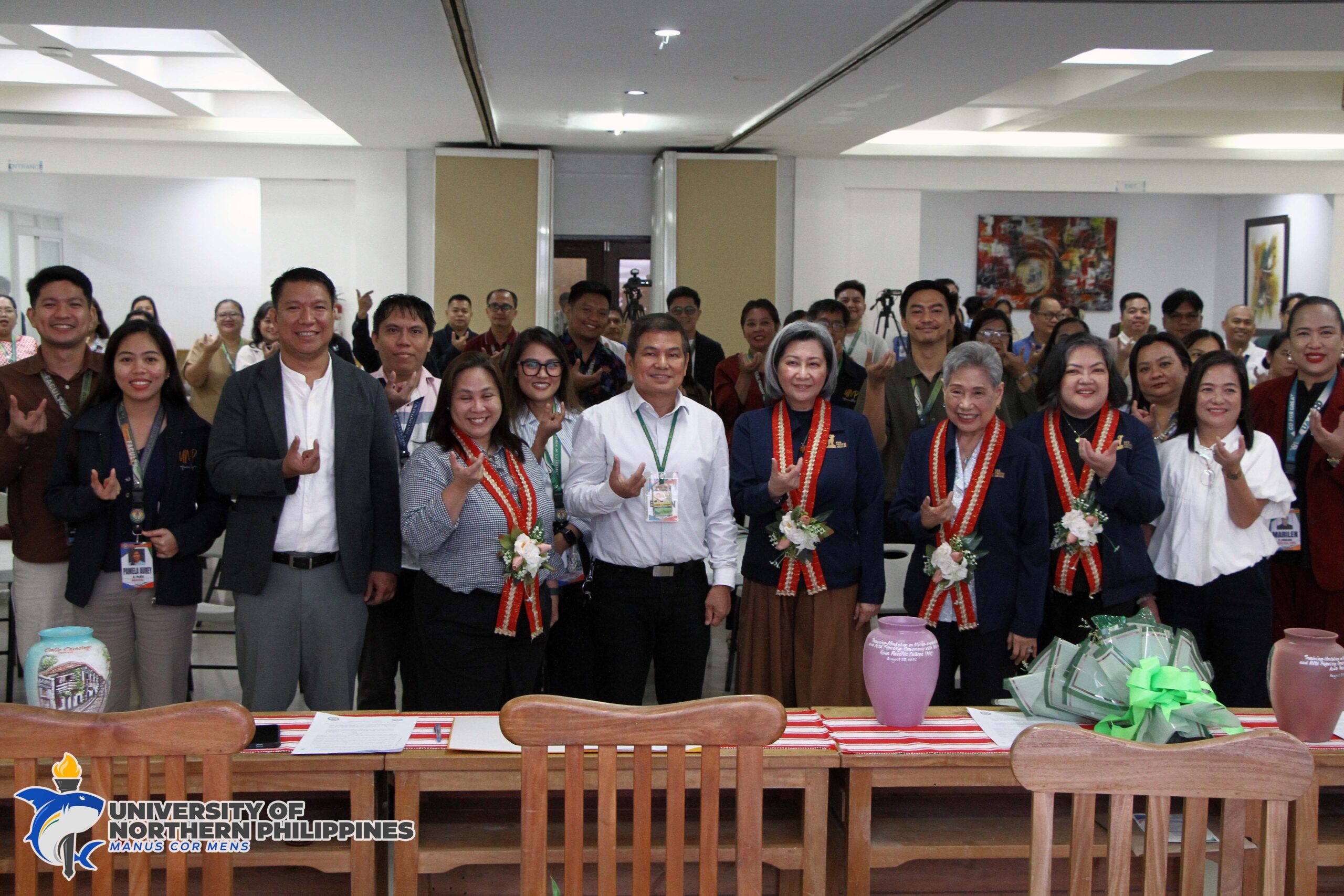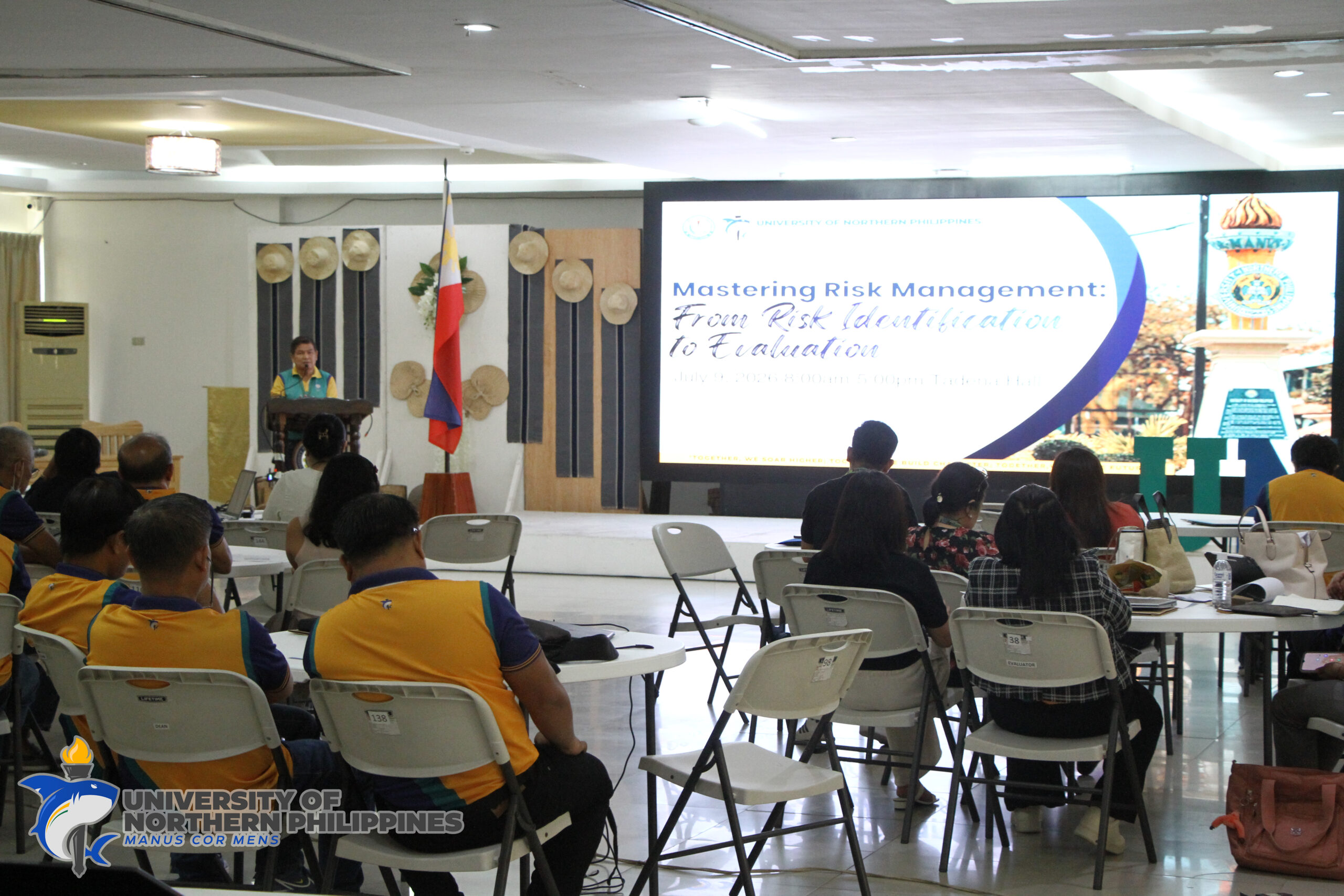
The University of Northern Philippines, through its Risk Management Team (RMT), successfully conducted a workshop on Risk Identification and Evaluation on July 9, 2026 at Tadena Hall.
The workshop was attended by process owners from the University’s various colleges and administrative offices, recognizing their critical role in the implementation of the Quality Management System (QMS). As individuals accountable for the performance and continual improvement of their respective processes, they are responsible for identifying, assessing, monitoring, and treating risks, as well as maintaining their respective Risk Registers Logs.
In his message, Mr. Albert Tejero, Vice President for Finance and Administration, emphasized that every goal, program, and project of the university carries inherent risks that must be properly managed. He challenged the University’s process owners and the RMT to proactively identify, assess, and mitigate potential risks to ensure the successful achievement of institutional objectives. He likewise emphasized the importance of utilizing strategic analytical tools such as strengths, weaknesses, opportunities, and threats (SWOT) and political, economic, social, technological, legal, and environmental (PESTLE) analyses in the risk management process. Explaining that SWOT examines the university’s internal environment while PESTLE evaluates external factors, he encouraged participants to use these tools as essential guides for informed planning and sound decision-making.
University President Dr. Erwin Cadorna likewise emphasized that effective risk management is a shared responsibility in the institution. He encouraged all process owners to adopt a proactive and systematic approach to manage risks, noting that doing so strengthens good governance, enhances organizational resilience, and contributes to the successful attainment of the University’s strategic goals. He further stressed that integrating risk management into the QMS enables risks and opportunities to be addressed effectively, thereby improving organizational performance, sustaining stakeholder confidence, and promoting a culture of continual improvement.
The highlight of the activity was the lecture-workshop on understanding and completing risk management documentation facilitated by Dr. Larraine Aguimatang, member of the RMT. Participants were guided through the proper accomplishment of risk management forms and the application of risk assessment and evaluation techniques in managing their respective processes.
The activity concluded with a comprehensive review and evaluation of the accomplished RRLs led by the Risk Management Team, providing participants with constructive feedback to ensure accuracy, consistency, and alignment of identified risks, controls, and treatment plans with their respective unit’s performance indicators and strategic objectives.
Through this initiative, UNP continues to strengthen its culture of proactive risk management by equipping process owners with the competencies needed to identify, evaluate, and manage risks effectively.
The workshop reinforced the University’s commitment to institutional resilience, sound governance, and a culture of continuous improvement. By advancing risk-based thinking—a core principle of the ISO 9001:2015 QMS—the initiative equipped organizational units with the capability to systematically identify, assess, and mitigate potential risks that could impact service quality, operational excellence, and the attainment of the University’s strategic goals. Through this proactive approach, the University further strengthened its capacity to deliver responsive, efficient, and quality-driven public service while sustaining organizational effectiveness and long-term institutional success.
Photo by Joel Tipon