“The government is creating the platform for you. Our partners are providing the tools, but the leap is yours today.”
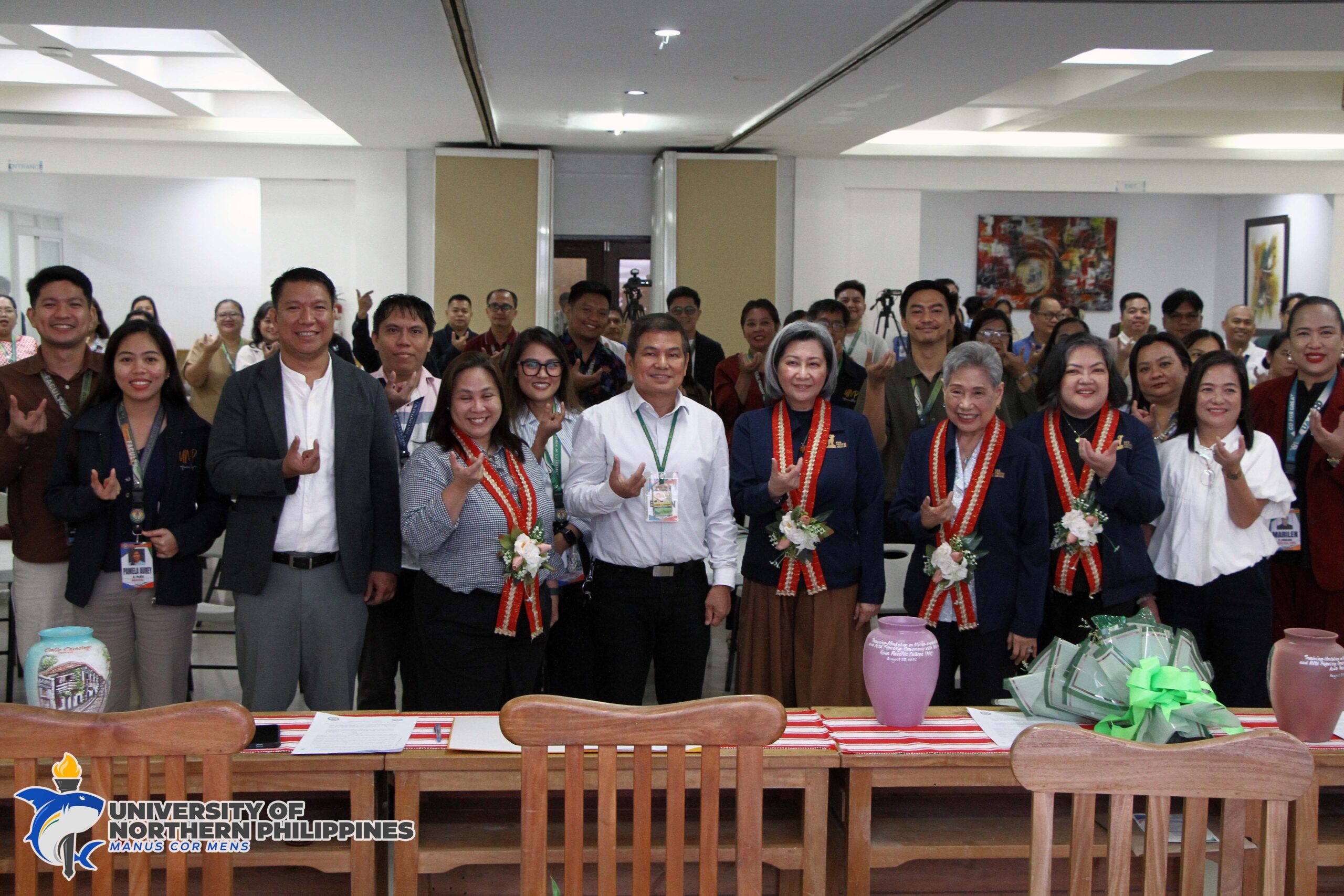
UNP President Dr. Erwin Cadorna issued this compelling challenge to UNPians and Ilocano learners, emphasizing that while the government and its partners are working together to open doors and equip learners with essential tools, the responsibility to step forward and embrace the future ultimately rests in their hands. His message highlighted future readiness as a shared commitment during the collaboration of the University of Northern Philippines with Asia Pacific College (APC) and IBM for the Training Workshop on Microcredentialing held on August 25, 2026 at the Tadena Hall.
Anchored on the theme, “Future-Ready Education: Bridging the Digital Divide through AI Skills and Microcredentials,” the activity brought together deans and program heads from the University’s various colleges in a collaborative effort to advance innovation and digital transformation in higher education. The workshop provided academic leaders with a strategic platform to explore ways of strengthening the University’s capacity to deliver flexible, accessible, and industry-responsive learning opportunities, with particular emphasis on developing artificial intelligence competencies and expanding the use of microcredentials.
Highlighting the transformative potential of the partnership Dr. Erwin Cadorna said the initiative seeks to confront one of the most pressing challenges in contemporary education—the digital divide that continues to limit access to learning and skills development, particularly among learners in remote and underserved communities. He stressed that as technology rapidly reshapes education and the world of work, ensuring equitable access to digital opportunities has become an urgent responsibility of educational institutions and their partners.
“The University of Northern Philippines wishes to address that digital divide by preaching education that is more accessible to the people, especially those in remote areas who are at risk of being left behind—not because they lack talent, but because they lack access. That, hopefully, will end today. This partnership is about reaching that divide,” Dr. Cadorna said.
The statement emphasized UNP’s resolve to make education more inclusive by extending relevant learning opportunities to Ilocano learners who may face geographical, technological, and resource-related barriers. Through collaboration with partners and the adoption of emerging learning pathways, the University aims to help ensure that learners are not excluded from opportunities for advancement simply because access to digital tools, specialized training, and educational resources remains beyond their reach.
Dr. Cadorna likewise emphasized the significant role of microcredentials in advancing a culture of continuous learning and skills development. As industries and professions continue to evolve, he pointed to the need for learners to acquire, update, and demonstrate competencies throughout their educational and professional journeys.
“We are building a national culture of lifelong learning. With microcredentials, we validate every step of the journey, every new competence,” he added.
His message highlighted how microcredentials can provide learners with a more flexible and progressive way of gaining recognition for specific skills and competencies. By validating learning achievements in particular areas, microcredentials can enable individuals to build qualifications over time while adapting to changing academic requirements, technological developments, and workforce demands.
In a strong call for collective action, Dr. Cadorna declared, “We will bridge the digital divide, one skill at a time. We will compete with no fear, but with competence. And we will do it together.”
The President’s message emphasized that bridging the digital divide cannot be achieved by a single institution alone. Rather, it requires sustained collaboration among academic institutions, government agencies, industry partners, educators, and learners to create accessible learning ecosystems, develop relevant competencies, and prepare communities to participate meaningfully in an increasingly digital and technology-driven future.
Meanwhile, Vice President for Academic Affairs Dr. Rolando Navarro, in his welcome address, stressed the growing importance of artificial intelligence competencies in preparing learners to navigate the rapidly changing landscape of work, education, and society. He emphasized that as AI continues to transform industries and communities, educational institutions must ensure that learners are equipped with the knowledge and skills needed to remain relevant and competitive.
“As artificial intelligence continues to transform workplaces and communities, developing AI skills is becoming increasingly important. Through microcredentials, we can provide learners with flexible pathways to acquire specific competences, validate their skills, and remain competitive in an evolving workforce,” Dr. Navarro said.
He pointed to microcredentials as a responsive learning approach that can enable students and professionals to pursue targeted skills development with their formal academic preparation. By recognizing specific and demonstrable competencies, microcredentials can provide learners with more flexible opportunities to enhance their qualifications, develop practical expertise, and respond more effectively to the emerging requirements of a technology-driven workforce.
Beyond skills development, Dr. Navarro emphasized the broader responsibility of educators and academic leaders in ensuring that the benefits of digital transformation are accessible to all learners.
“As educators, we have the responsibility to ensure that no learner is left behind in this digital transformation. We must embrace innovative approaches that make education more responsive, inclusive, and relevant to the needs of society and industry.”
His message served as a call for educators to embrace innovation and explore learning models that expand access to relevant competencies. It also reinforced the University’s commitment to promote an inclusive and future-oriented academic environment—one that responds to the evolving needs of communities and industries while empowering learners to thrive amid continuing technological change.
Asia Pacific College (APC) President Dr. Maria Teresita Medado highlighted the institution’s efforts to bring microcredentialing beyond the traditional boundaries of colleges and universities, making skills development and lifelong learning more accessible to a wider segment of society.
“We have established training sessions in the malls. We started about three malls, and now we’re beginning to look at other regions, going mall by mall, to make sure that not only universities and colleges will learn about the value of microcredentials, but also the common people,” Dr. Medado shared.
The initiative reflects an expanding approach to education—one that brings learning opportunities closer to communities and reaches individuals outside conventional academic settings. By establishing training sessions in accessible public spaces, APC seeks to introduce the value and potential of microcredentials not only to students and academic institutions but also to workers, professionals, and community members seeking opportunities to acquire new competencies or enhance existing skills.
Dr. Medado’s message highlighted the potential of microcredentials to make learning more flexible, inclusive, and responsive to the realities of today’s workforce. As industries continue to evolve and new skills emerge, alternative and accessible learning pathways can enable individuals to pursue continuing skills development regardless of their educational background, location, or stage in life.
The initiative further demonstrated how partnerships and innovative delivery models can help democratize access to relevant learning opportunities, extending the benefits of microcredentialing beyond the classroom and into the communities where people live and work.
Adding to the strong institutional support for the initiative, Dr. Al Gerald Barde, Education Supervisor II of the Commission on Higher Education (CHED) Regional Office I, affirmed the agency’s commitment to advance quality education through innovative, responsive, and well-designed learning pathways. His message highlighted the importance of creating learning opportunities that are structured to address the changing needs of learners, industries, and society.
Dr. Barde likewise encouraged the University of Northern Philippines to move forward with its application for microcredentialing, recognizing its potential to further strengthen the University’s efforts in providing flexible and relevant opportunities for skills development. His encouragement signaled CHED Regional Office I’s support for institutional initiatives that broaden access to competency-based learning and help prepare learners for the demands of an increasingly dynamic and technology-driven environment.
The expression of support further reinforced the growing momentum behind UNP’s pursuit of microcredentialing as part of its commitment to quality, accessible, and future-responsive education.
A significant highlight of the activity was the signing of a Memorandum of Understanding (MOU) between the University of Northern Philippines (UNP) and Asia Pacific College (APC), formalizing their collaboration to expand access to digital learning opportunities and strengthen the development of future-ready competencies through the IBM SkillsBuild learning platform.
Under the agreement, APC shall provide and administer access to the IBM SkillsBuild platform for qualified UNP students and employees, subject to approval and the applicable policies and terms governing the platform. APC will also designate a Program Coordinator or Point Person to oversee access, coordination, and participation monitoring, while ensuring compliance with internal policies, data privacy, information security, and other institutional requirements.
For its part, UNP shall identify and endorse eligible students and employees who will participate in the learning initiative and support APC in promoting the program and encouraging learner engagement. The University will likewise designate a counterpart coordinator to facilitate communication, scheduling, coordination, and reporting between the two institutions. The agreement also clearly establishes that while UNP will facilitate the participation of its academic community, the IBM SkillsBuild platform remains independently owned, provided, and administered outside the University’s control.
The collaborative activity was further enriched by a series of expert presentations that provided participants with a broader understanding of the institutions, programs, and learning opportunities behind the initiative. Ms. Abigail Lesaca, Corporate Social Responsibility Leader of IBM Philippines, discussed the history and background of IBM and its continuing role in advancing technology-driven learning and skills development. Meanwhile, Ms. Josephine De La Cuesta, Executive Director for Academic Services of APC, delivered a discussion on Microcredentialing, highlighting its relevance as a flexible pathway for recognizing specific and industry-relevant competencies.
Concluding the program, Dr. Sally Jarin, Director of the International Affairs and External Linkages Office, expressed her profound gratitude to the partner institutions and all those who contributed to the successful conduct of the collaborative activity.
Through the partnership, UNP continues to strengthen its pursuit of future-ready education by opening pathways for learners to develop AI-related and other in-demand competencies, earn recognized credentials, and engage in continuous learning. The initiative reflects the University’s broader commitment to prepare its students and employees for an increasingly digital, skills-driven, and competitive world of work while promoting lifelong learning opportunities that extend beyond traditional academic pathways.