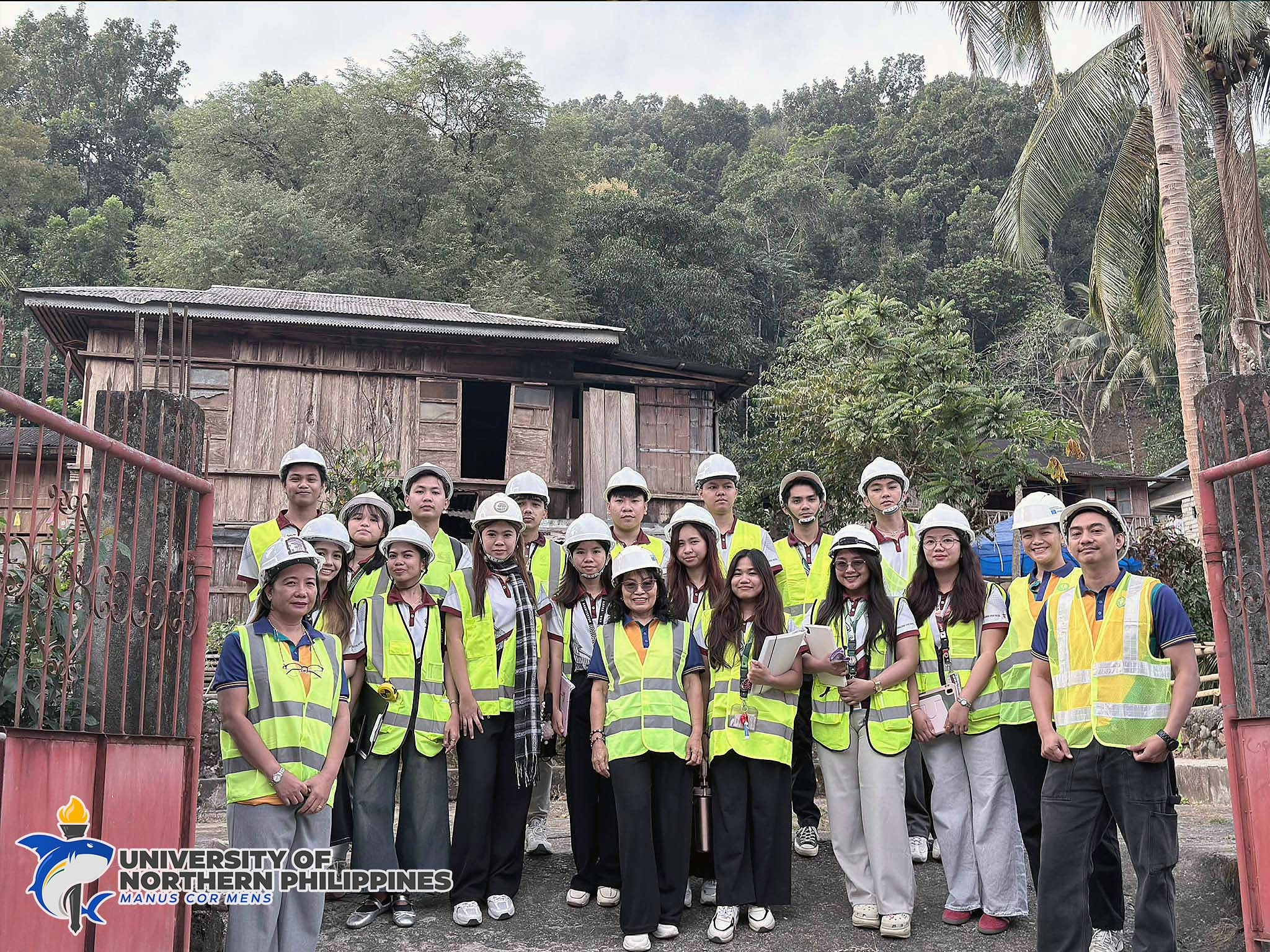
Driven by a commitment to protect ancestral identity and fortify cultural resilience, the University of Northern Philippines College of Architecture and Built Environment (UNP-CArBE) took the lead in a three-day architectural documentation initiative from February 5–7, 2026, in Poblacion, Licuan-Baay, Abra, bringing together faculty members, students, and local government officers. The undertaking meticulously recorded centuries-old traditional houses—some dating back to the 1700s—constructed on rock foundations and Narra wood planks, highlighting UNP’s proactive and enduring role in advancing heritage conservation.
The opening day was highlighted by a lecture on “Understanding Heritage” delivered by Dr. Fatima Nicetas Alonzo, CArBE Dean, which set the academic and cultural framework for the conservation initiative. This was followed by a warm cultural presentation from the host community, symbolically ushering in the start of the heritage conservation effort and affirming local support for the project. Throughout the activity, documentation teams conducted extensive fieldwork, successfully recording 24 heritage houses through detailed architectural surveys, systematic photo documentation, and in-depth conversations with homeowners and caretakers to validate historical accounts and enrich the collected data.
The conservation initiative was spearheaded by Dr. Alonzo and Architect Julius Artates, Program Head of the BS Architecture program, with the strong support of Architect Ludivina Lozano, College Research Coordinator and Program Head of BS Environmental Planning, and Architect Carol Pugal, a faculty member of the college. Their collective expertise provided academic direction and technical guidance throughout the activity, ensuring that conservation principles and heritage-sensitive practices were upheld.
Strengthening collaboration between the academe and the local government, Licuan-Baay Municipal Tourism Officer Jeshmarie Ken-Wan Martes served as community coordinator, playing a key role in facilitating close coordination, stakeholder engagement, and on-site arrangements. Her involvement helped align the conservation efforts with local tourism and cultural preservation goals, fostering a shared sense of ownership among community partners.
The team was further reinforced by the participation of sixteen students, with four representatives from each section of the heritage specialization subject. Their active involvement not only augmented the workforce on the ground but also provided them with valuable hands-on experience in heritage documentation and conservation work. This collaborative undertaking highlighted the university’s commitment to experiential learning, community engagement, and the preservation of local cultural heritage through meaningful academic–community partnerships.
Ultimately, the documentation is envisioned as a critical resource for both the local government and the community, offering reliable data to guide efforts in safeguarding ancestral houses amid growing pressures of modernization. Beyond preservation, the initiative seeks to deepen public appreciation of cultural heritage while shaping future architects as responsible stewards of identity, continuity, and place.
Article by Charles Andrada.