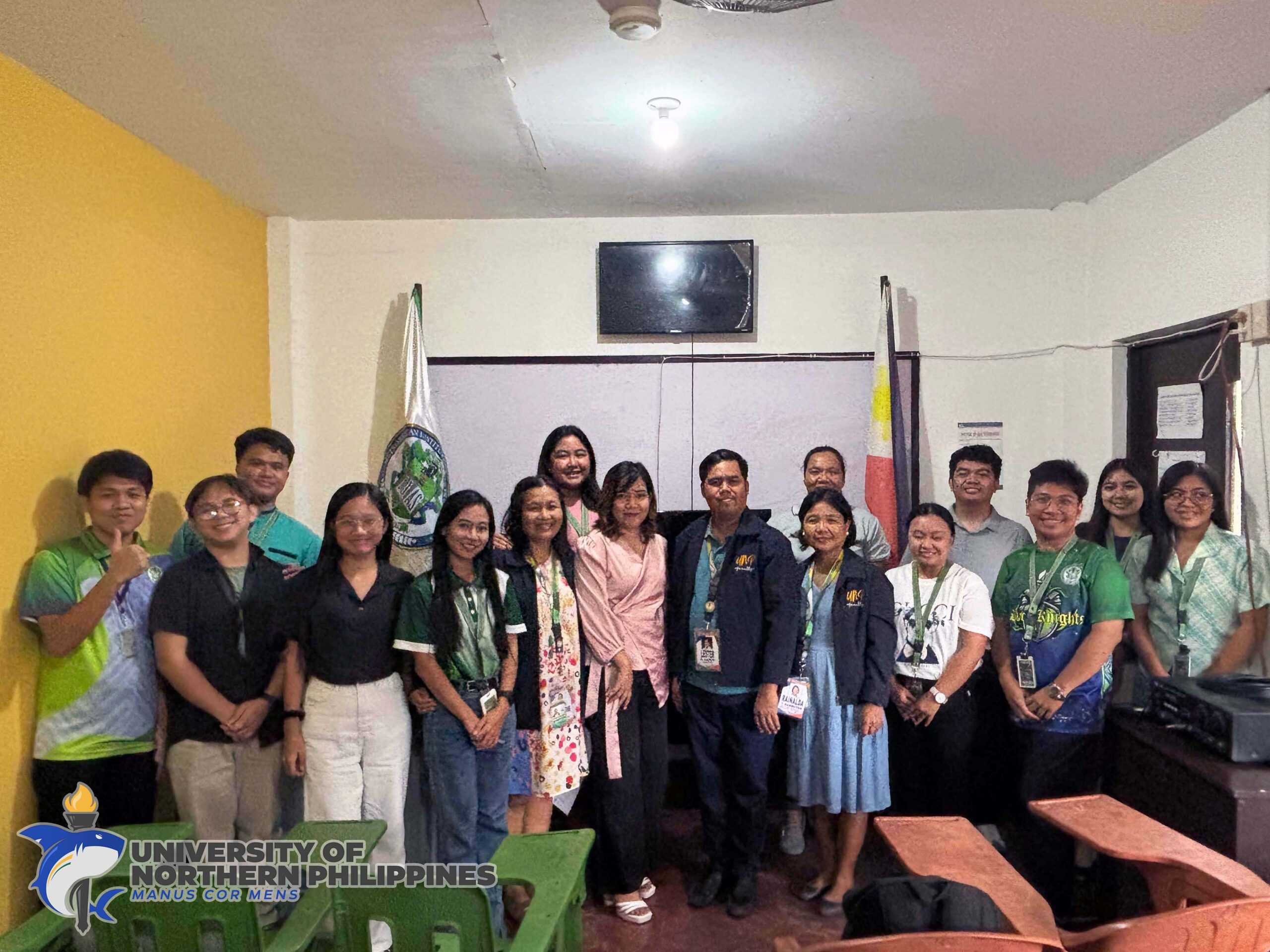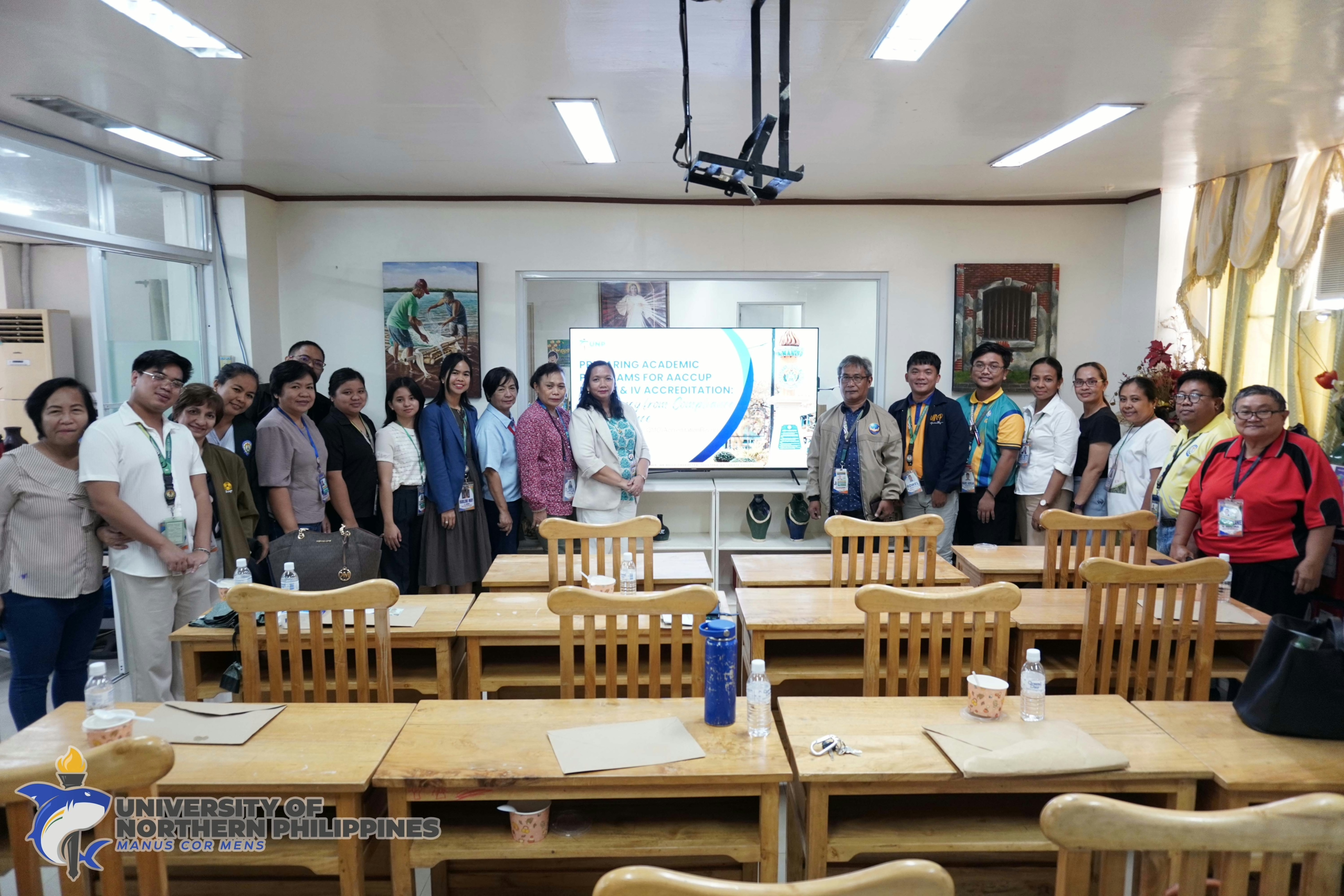
The University of Northern Philippines conducted a three-day capability-building activity entitled “Preparing Academic Programs for AACCUP Levels II and IV: A Journey from Compliance to Excellence” on February 12–14, 2026 at the Romualdo Tadena Hall.
The activity convened representatives from the four colleges whose academic programs are set for accreditation this year, reinforcing the University’s commitment to meet the rigorous standards of the Accrediting Agency of Chartered Colleges and Universities in the Philippines (AACCUP). Designed to enhance institutional preparedness, the sessions gathered program heads and area chairpersons for in-depth discussions and strategic planning. Internal accreditors served as resource speakers, providing expert guidance, clarifying evaluation criteria, and sharing best practices to ensure compliance and continuous quality improvement across all areas under review.
Mr. Albert R. Tejero, Vice President for Finance and Administration and Officer-in-Charge, urged participants to undertake a thorough review of their respective programs, emphasizing the importance of identifying existing gaps and setting clear priorities for improvement. He called on academic units to translate these assessments into concrete, strategic actions that will enhance academic quality, ensure compliance with accreditation standards, and elevate overall institutional performance in preparation for upcoming accreditation visits.
The opening day of the activity centered on strategic preparations for Level IV accreditation, stressing the institution’s commitment to excellence and continuous quality improvement. Dr. Marlou Savella led a comprehensive discussion on research development, emphasizing the need to cultivate a robust and sustainable research culture. She highlighted key benchmarks such as producing quality publications, securing funded projects, strengthening faculty and student engagement, establishing efficient research management systems, and demonstrating measurable societal impact—supported by adequate funding and strong mentorship programs.
With adjustments in the program schedule, the session on International Linkages and Consortia was also conducted, bringing attention to the critical role of dynamic global partnerships in achieving accreditation standards. The discussion emphasized forging formal agreements, promoting faculty and student exchanges, and initiating collaborative research and academic projects that yield tangible institutional gains and expand the university’s global footprint.
In the afternoon session, Dr. Luzviminda Relon emphasized effective teaching and learning as key drivers of graduate success, highlighting outcomes-based education, continuous curriculum improvement, faculty development, and strong licensure and employment results as measures of program quality.
Dr. Erwin Tolbe, meanwhile, outlined the institution’s strategic planning process, highlighting alignment with university goals, participatory planning, and data-driven monitoring systems that promote accountability and continuous improvement.
Dr. Lloyd Mata, Officer-in-Charge of the University Extension Office, guided participants on conducting impact studies to systematically measure and document the outcomes of research and extension initiatives, emphasizing accountability and measurable results. Prof. Melody Gacita stressed community service as a reflection of social responsibility through relevant and sustainable outreach programs, while Dr. Necy Cesaria Romo highlighted the importance of organized and clearly labeled documents to facilitate smooth accreditation evaluation.
The second and third days focused on Level II and Level IV – Phase I accreditation, covering the ten AACCUP evaluation areas. Dr. Corazon Pardo discussed the clarity and alignment of the University’s Vision, Mission, Goals, and Objectives (VMGO), while Dr. Alma Segismundo emphasized faculty qualifications, professional development, and research engagement as key indicators of quality assurance.
Dr. Relon led an in-depth discussion on curriculum and instruction, underscoring the importance of designing, implementing, and delivering curricula that ensure mastery of knowledge and skills consistent with program outcomes and industry standards. Complementing this, Dr. Marites Duquinal presented on student support services, highlighting the significance of comprehensive guidance programs, student development initiatives, and responsive career support systems in fostering holistic learner growth.
Reinforcing the institution’s academic thrusts, Dr. Savella revisited strategies for strengthening the research culture, emphasizing sustained scholarly engagement and productivity. Dr. Efren Galapon, meanwhile, outlined the role of extension and community involvement, advocating for responsive, needs-based, and sustainable engagement initiatives that create meaningful social impact.
Dr. Leilani Basa emphasized the indispensable role of the library in advancing instruction and research, noting the need for accessible, up-to-date, and technology-driven resources. Addressing learning environments, Dr. Nelia Verzosa discussed the physical plant and facilities, stressing adequacy, safety, and regular maintenance to support academic excellence. Dr. Marjorie Dafun further elaborated on laboratory resources, focusing on the availability, functionality, and proper utilization of equipment to enrich experiential learning.
Capping the series of presentations, Engr. Joselito Totaan highlighted the importance of effective administration, underscoring strong governance, sound leadership, clear policy implementation, and efficient management systems to ensure transparent, streamlined, and outcomes-driven program operations.
In conclusion, the three-day activity served as a comprehensive and strategic preparation for both Level II and Level IV accreditation, reinforcing that quality assurance is a shared responsibility requiring strong leadership, committed faculty members, systematic planning, and well-organized documentation. With accreditation visits scheduled from May to December 2026, the university remains steadfast in its pursuit of continuous improvement, institutional excellence, and sustained compliance with AACCUP standards.
The activity emphasized that accreditation goes beyond fulfilling regulatory requirements; it represents an ongoing commitment to quality assurance, institutional effectiveness, and the pursuit of academic excellence. Participants were encouraged to prioritize early preparation, maintain systematic documentation, and foster collaborative efforts—key factors in achieving higher accreditation levels.
The University has slated several of its programs for accreditation in 2026, reflecting its commitment to academic excellence. Scheduled visits include the Bachelor of Science in Midwifery under the College of Health Sciences on May 2–4; the Bachelor of Arts in Political Science and Bachelor of Science in Biology from the College of Arts and Sciences; as well as multiple programs from the College of Teacher Education—Bachelor of Elementary Education, Bachelor of Secondary Education, Bachelor of Early Childhood Education, Master of Arts in Mathematics Education, and Master of Science in Teaching—on June 17–19. Later in the year, the Doctor of Public Administration from the College of Public Administration and the Bachelor of Science in Nursing from the College of Nursing are set for evaluation on December 2–4.
These accreditation visits require program coordinators and faculty members to ensure that Level IV programs maintain exemplary compliance and quality standards, while Level II programs demonstrate marked improvement and readiness. Achieving these standards involves meticulous preparation, seamless coordination, and a unified institutional effort toward academic excellence.