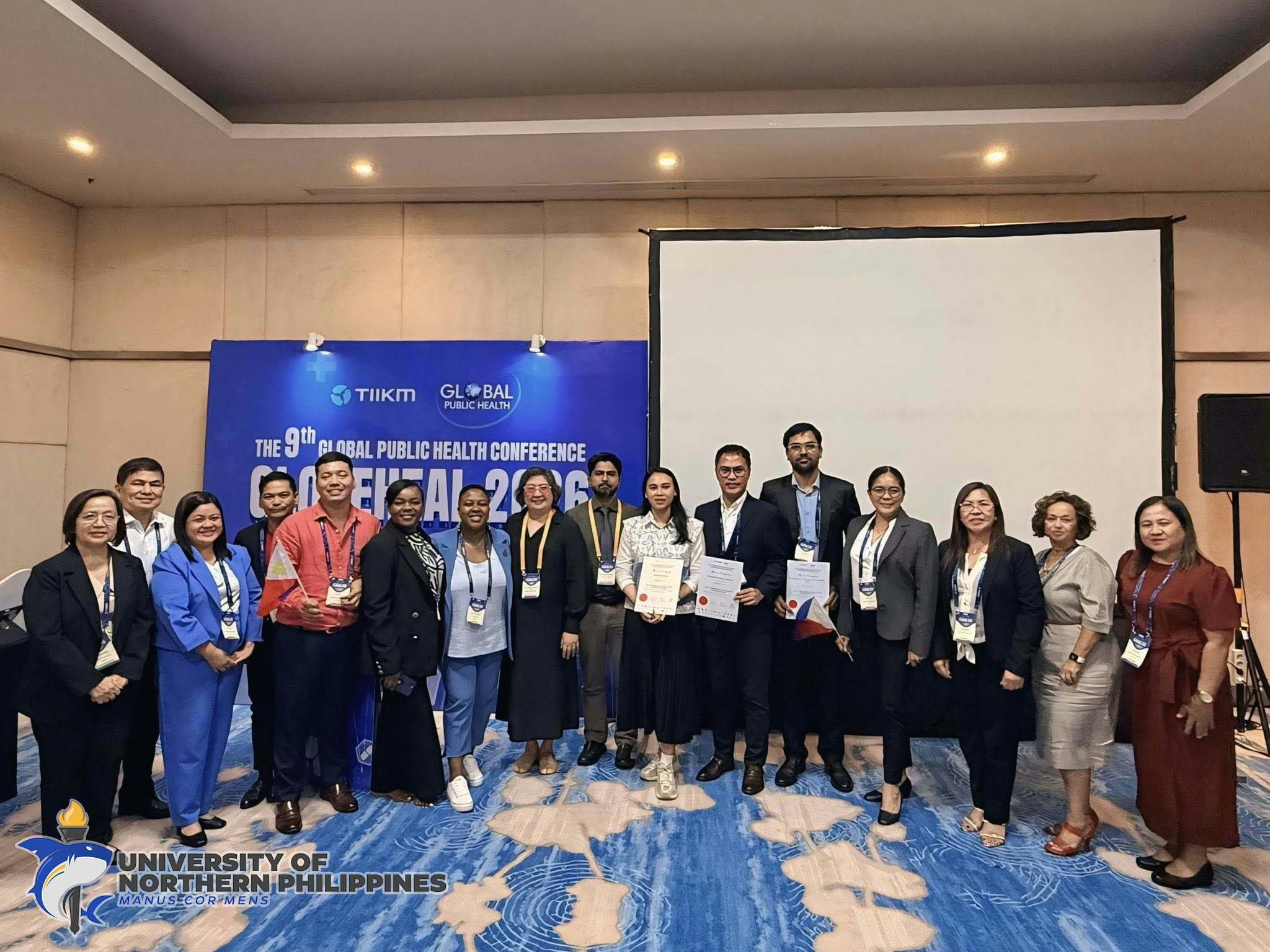
In a defining moment for Philippine higher education and global health diplomacy, Dr. Erwin F. Cadorna, President of the University of Northern Philippines (UNP), represented the country at the distinguished international panel discussion, “Global Health Challenges in the Digital Era: Pathways to Advancing Research,” hosted by Udayana University in Bali, Indonesia on February 11, 2026.
The high-level forum convened scholars and health leaders from the United Kingdom, South Africa, Indonesia, and the Philippines to examine the sweeping transformation of health systems in the digital age. Amid this convergence of global expertise, President Cadorna articulated the Philippine perspective with clarity and statesmanship, grounding his message in innovation, equity, and research-driven governance. His participation amplified the national voice and affirmed UNP’s expanding influence in shaping international discourse on public health and digital transformation.
The distinguished panel included Dr. Vincent La Placa and Dr. Julia Morgan of the University of Greenwich in the United Kingdom, Dr. Makhutsa Charlotte Mokoatle of the University of Johannesburg in South Africa, and Dr. Putu Ayu Swandewi Astuti of Udayana University in Indonesia, alongside President Cadorna representing UNP. Together, they examined the profound opportunities and pressing challenges brought about by rapid digitalization.
Dr. La Placa explored the expanding influence of internet platforms and digital screens on public health behavior and information exchange, cautioning against fragmentation in health systems and the growing difficulty of distinguishing credible evidence from misinformation in an era increasingly shaped by artificial intelligence. Dr. Mokoatle shared South Africa’s national digital health strategy, highlighting initiatives that integrate mobile maternal health services, electronic vaccination systems, electronic health records, and multilingual digital campaigns. She emphasized that strong institutional foundations, cybersecurity safeguards, and sustained workforce development are indispensable to responsible digital transformation.
From Indonesia, Dr. Astuti discussed regulatory advancements, including the establishment of a dedicated Ministry for Technology to oversee digital governance, underscoring the importance of coherent regulatory frameworks to address misinformation and ensure ethical oversight of digital platforms. Dr. Morgan highlighted the United Kingdom’s “virtual wards” model, where patients are remotely monitored in their homes using wearable devices and digital equipment, demonstrating how rigorous research can directly inform healthcare system redesign. Across diverse national contexts, a shared principle emerged: no country possesses unlimited financial, technological, or human resources, and digital reform must therefore be strategic, ethical, and evidence-based.
Within this global exchange, President Cadorna presented a compelling account of the Philippine experience. He described digitalization as a transformative force redefining governance and healthcare delivery, observing that in today’s interconnected world, information holds strategic value comparable to the most vital global resources. He outlined the country’s progress in expanding telemedicine services, implementing electronic health information systems, integrating AI-assisted diagnostic technologies, strengthening mobile health platforms, and developing digital mental health initiatives.
At the same time, he addressed structural realities with candor and responsibility. He acknowledged persistent limitations in internet connectivity across geographically isolated communities, the shortage of technological devices in rural areas, gaps in digital competency among Barangay Health Workers, concerns regarding patient confidentiality and cybersecurity, and the pervasive spread of health misinformation. His message was resolute: technology must be harnessed to promote equity rather than deepen disparities. Digital transformation, he stressed, should serve as an instrument of inclusion, ensuring that innovation reaches and uplifts the most vulnerable sectors of society.
A central theme of the dialogue was the indispensable role of research in shaping effective and ethical public policy. Governments depend on rigorous, context-sensitive evidence to guide digital reforms, regulate artificial intelligence, and safeguard public welfare. Reflecting on UNP’s participation, President Cadorna reaffirmed the University’s enduring mission:
“Our presence in this global dialogue affirms UNP’s commitment to research excellence and social responsibility. As digital transformation reshapes healthcare worldwide, we must ensure that innovation strengthens equity, protects communities, and advances inclusive development. Research remains the cornerstone of responsible and transformative leadership.”
His statement underscored the responsibility of academic institutions not merely to observe change, but to guide it through principled scholarship, international collaboration, and socially responsive research.
The event also served as a premier platform for strengthening institutional partnerships. Engagements with Udayana University—a respected government institution recognized for its strong medicine and allied health programs—opened avenues for deeper academic collaboration. The Philippine delegation was further reinforced by the presence of key UNP officials: Dr. Edelyn A. Cadorna, URDO Director; Dr. Joseph G. Taban, URDO Assistant Director; Dr. Francis Don L. Nero, Dean of the College of Nursing; and Dr. Joussa B. Bermio, Dean of the College of Health Sciences.
President Cadorna’s engagement in this prestigious international forum marks another milestone in UNP’s growing global presence. Under his leadership, the University of Northern Philippines continues to strengthen its culture of research excellence, expand international partnerships, and position itself as a credible contributor to policy-relevant scholarship. As health systems worldwide navigate the complexities of digital transformation, UNP stands firm in aligning technology with humanity, research with governance, and innovation with responsibility—solidifying its legacy as a Philippine institution with a distinctly global voice.
Article by Francis Don Nero.