The University of Northern Philippines–College of Teacher Education (UNP-CTE) brought education to life through community-centered engagement as it staged the SALAYAM Festival under Project LARO (Localized Application of Recreational Outputs) on April 27, 2026 in Manzante, Magsingal, Ilocos Sur.
The activity featured a one-day field-based training showcasing Ilocano games and dances, grounded in facilitation skills, health promotion, and community leadership development.
Anchored on the theme “Reviving Traditions, Strengthening Leadership, Building Communities,” the program challenged participants to go beyond observation as they learned, performed, and critically evaluated traditional practices as viable, replicable initiatives for barangay-level engagement. The implementation was spearheaded by Dr. Matilde Concordia, Dr. Eric Reotutar, and Dr. Schubert Soliven, who integrated cultural instruction with leadership development and training design, ensuring that heritage-based learning translated into practical community empowerment.
Barangay Captain Madelyn Tabin set a clear and purposeful agenda, highlighting cultural continuity and collective action as the program’s guiding objectives. Organizers subsequently outlined concrete deliverables, challenging participants to master core movements, facilitate game formats, and culminate the training through a cohesive group presentation that showcased both learning and collaboration.
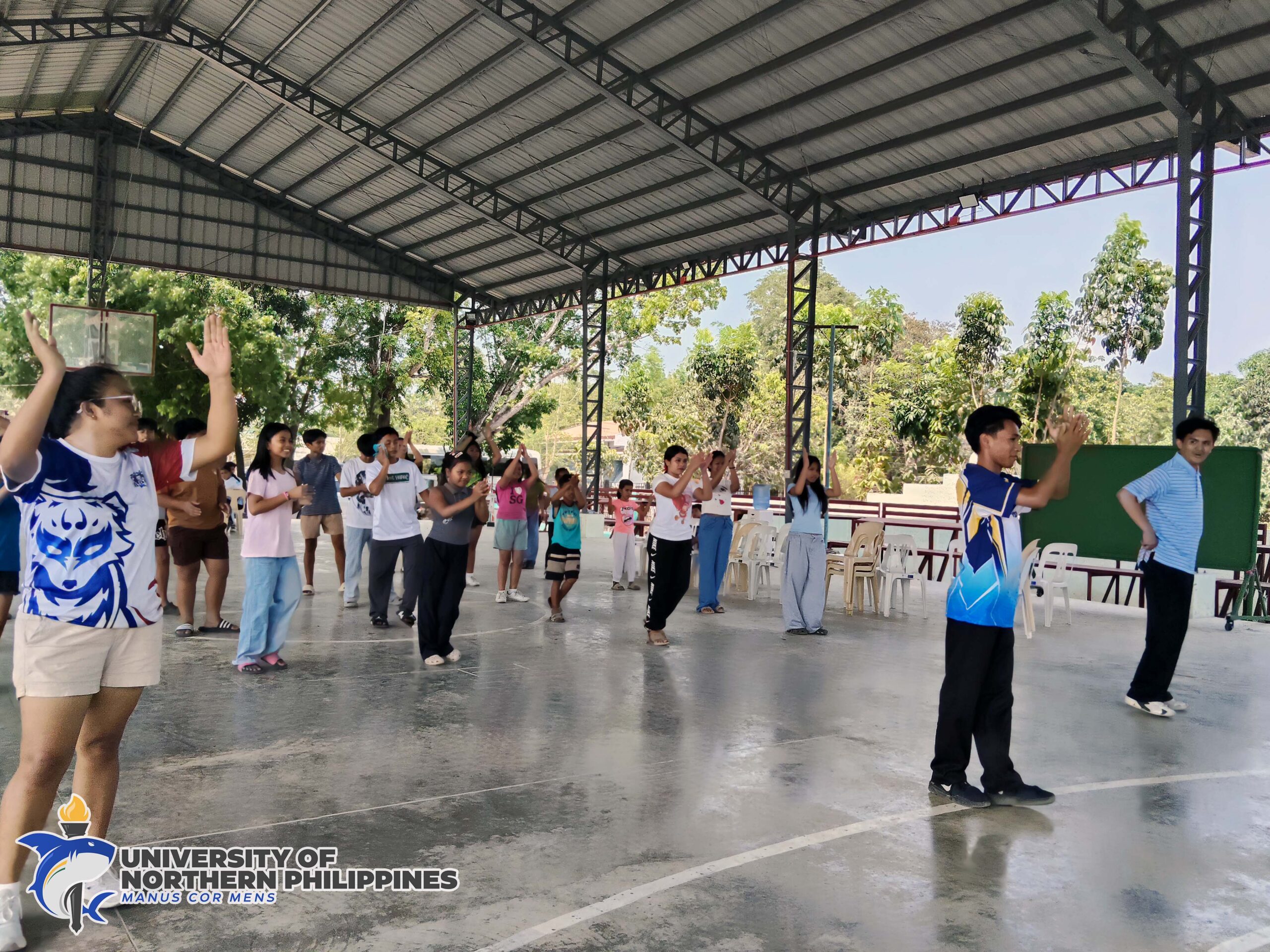
BCAEd students initiated the practical phase with a guided warm-up that drilled fundamental arm and foot positions used in Ilocano dance. The session transitioned to a workshop on traditional games and dance sequences. Under faculty supervision, participants dissected rules, timing, and cooperative mechanics, linking each activity to its cultural context and facilitation method.
The afternoon session transitioned into intensive rehearsals for Sala and Ay-ayam where teams meticulously refined timing, spacing, and role assignments. What began as structured drills evolved into synchronized cultural performances. This culminated in return demonstrations as each group delivered their choreography with precision while articulating the cultural meanings embedded in every movement.
A structured critique closed the technical component, with facilitators issuing targeted feedback on accuracy, timing, and delivery.
The activity concluded with the awarding of certificates and performance citations. Backed by the University Extension Office and CTE administration, the project advances UNP’s extension agenda: sustain Ilocano practices through trained local facilitators and repeatable community programs.