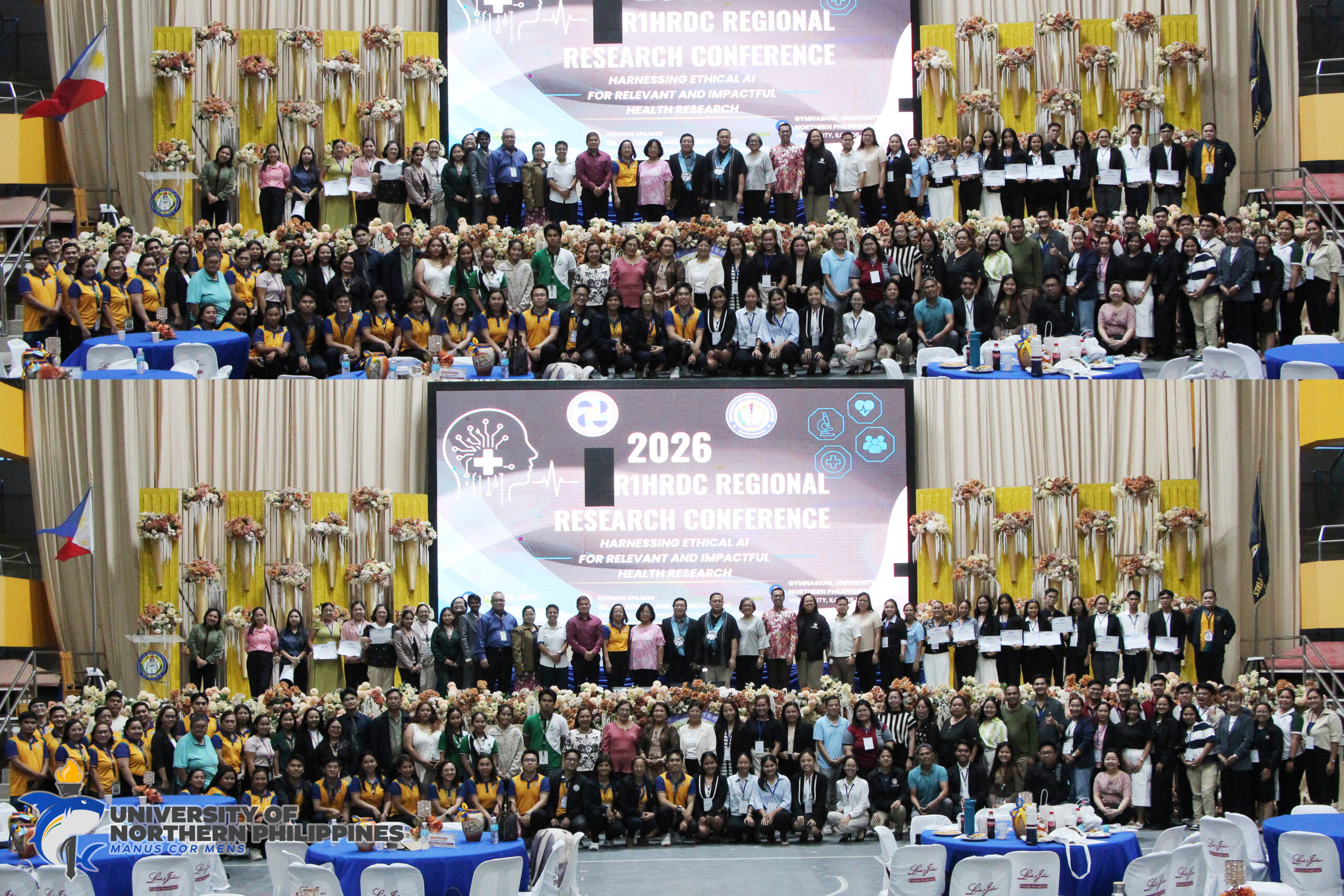
The University of Northern Philippines (UNP) served as the host institution for the 2026 Region 1 Health Research and Development Consortium (R1HRDC) Regional Research Conference held on June 5 at the UNP Gymnasium in Vigan City, Ilocos Sur.
Anchored on the theme “Harnessing Ethical AI for Relevant and Impactful Health Research,” the conference convened students, professionals, researchers, institutional leaders, health care representatives, and partner agencies from R1HRDC member institutions and other participating organizations for a full day of research presentations, knowledge sharing, and discussions on responsible and community-responsive health research.
With artificial intelligence increasingly influencing research, data analysis, and decision-making, the conference provided a timely platform to discuss how AI can be used ethically and meaningfully in health research. It also highlighted the role of regional collaboration in producing research that is relevant, useful, and responsive to individual and community health needs.
R1HRDC serves as a regional partner of the Philippine Council for Health Research and Development (PCHRD) to strengthen health research capabilities, promote collaboration, and encourage resource sharing among government agencies, academic institutions, health care facilities, and other organizations involved in health research and development in Region 1.
The conference opened with the ribbon-cutting of the research exhibit, led by officials from PCHRD, R1HRDC, UNP, and partner institutions.
In his welcome message, Dr. Leo Solis, Chairperson of R1HRDC, emphasized that the conference theme calls for health research that is relevant and impactful while upholding the integrity of the research process and protecting patients’ rights and well-being. He noted that the use of artificial intelligence in research presents ethical challenges, including algorithmic bias, transparency, explainability, and data protection, which researchers must proactively address to ensure fair and equitable outcomes.
Dr. Jose Orosa III, Officer-in-Charge Project Leader of R1HRDC, also delivered a welcome message, noting that artificial intelligence is no longer a distant concept but is already shaping how researchers search literature, manage data, analyze patterns, predict risks, communicate findings, and design interventions. He emphasized that ethical AI in health research is not simply about using modern tools, but about using them responsibly, ensuring that AI helps close gaps rather than widen them.
Representing the host institution, Dr. Erwin Cadorna, President of the University of Northern Philippines, delivered the inspirational message, noting that artificial intelligence has become ubiquitous, readily available, and increasingly a daily collaborator in research and professional work. He emphasized that while the potential of AI is remarkable, its use must be guided by ethical responsibility and serve as an adjunct to professional judgment and human interaction, rather than a substitute for human expertise, in addressing national challenges, improving public services, and advancing sustainable and equitable development.
The conference featured the keynote address of Dr. Cherrie Melanie Ancheta-Diego, Director IV of the Commission on Higher Education Regional Office I, who described the event as an important moment of convergence and collaboration among health practitioners, researchers, agencies, and institutions. She emphasized that the sharing of new ideas during the conference should lead not only to discussion, but to concrete actions and outcomes that can improve people’s lives.
Dr. Ancheta-Diego also underscored the responsibility carried by health researchers, reminding participants that their work is closely tied to the lives and well-being of Filipinos. She stressed the need for a clear health research framework in the region to properly situate the use of artificial intelligence and emerging technologies, and expressed confidence that research outcomes can be anchored toward the achievement of national development goals. She further encouraged participants to make research a way of life and urged them to find out their “research DNA.”
The theme was further deepened through the virtual plenary session of Usec. Leah Buendia, Undersecretary for Research and Development and Officer-in-Charge of the Office of the Executive Director of DOST-PCHRD. Speaking on “Harnessing Ethical AI for Relevant and Impactful Health Research,” she discussed the growing role of artificial intelligence in health research and highlighted initiatives such as the AI-ready ASEAN Program, the AWS AI Innovation Sandbox, and the National AI Strategy for the Philippines.
Usec. Buendia emphasized that as AI becomes more integrated into research systems, data analysis, and innovation platforms, its use must remain responsible, transparent, and directed toward public benefit. Her message reinforced the conference’s central call for researchers and institutions to use emerging technologies to strengthen evidence-based decision-making, improve health research systems, and support innovations that are relevant, inclusive, and impactful.
The program also featured the dissemination of an R1HRDC-funded study by Dr. Doreen Domingo, Project Leader from Mariano Marcos State University. She presented the paper titled “Tissue Repair Progression in Liver and Stomach of Alcohol Fed Male ICR Mice Using Freeze-Dried Pomacea canaliculata Slime and Bovine Milk,” underscoring the value of funded research in generating scientific evidence for future health-related studies and applications.
Research exchange remained at the core of the conference through oral and poster presentation competitions in both student and professional categories. These sessions gave participants the opportunity to present their studies, engage with evaluators and fellow researchers, and contribute to the growing body of health research outputs in the region. Non-competing research results from student and professional presenters were also featured as part of the dissemination activities.
The event culminated in an awarding ceremony recognizing outstanding research presentations and contributions during the conference. Dr. Cynthia Lopez, Chairperson of the Regional Utilization Committee, delivered the closing remarks, emphasizing the continuing importance of research collaboration in strengthening the health research ecosystem of Region 1.
Through the 2026 R1HRDC Regional Research Conference, the consortium reaffirmed its commitment to building a stronger, more responsive, and more collaborative health research community in Region 1. The conference served not only as a venue for presenting research outputs but also as a space for dialogue, ethical reflection, and partnership to advance health research that keeps relevance, responsibility, and public welfare at its core.
Artcile by: Dean Alvin Pablico
Photo by: Joel Fabillaran