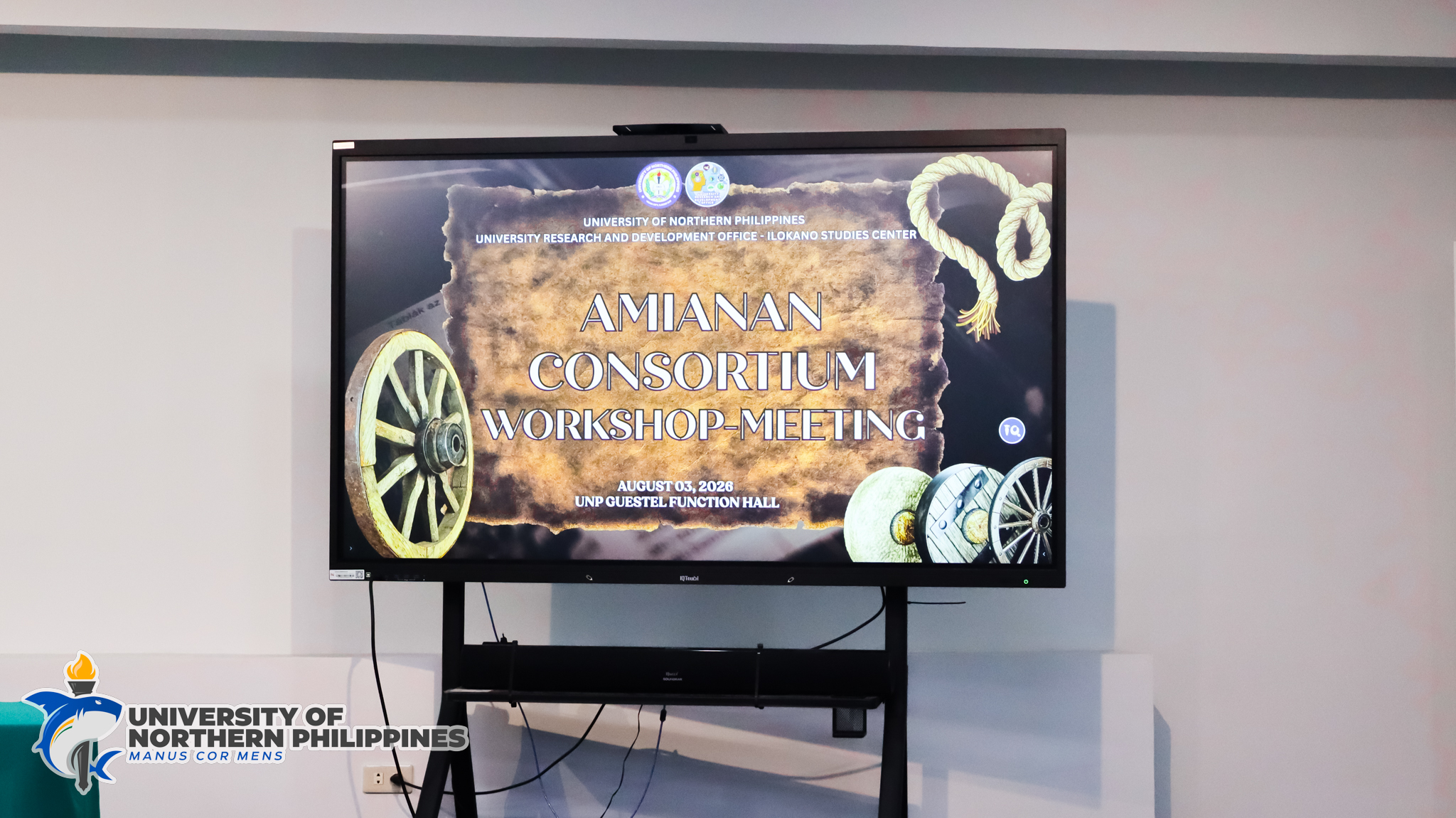
The University of Northern Philippines, through its University Research and Development Office–Ilocano Studies Center, strengthened regional collaboration in Ilokano language, culture, and heritage research as it hosted the Amianan Consortium Workshop-Meeting on August 3, 2026, at the UNP Guestel Function Hall.
The gathering convened consortium members and stakeholders to advance collaborative initiatives, share best practices, and chart strategic directions for the promotion, preservation, and development of Ilokano studies in Northern Luzon.
UNP President Dr. Erwin Cadorna welcomed the delegates and reaffirmed the University’s commitment to advance regional collaboration in the preservation and promotion of Northern Luzon’s rich cultural heritage. In his message, he stressed the vital role of the Amianan Consortium as a unifying platform that brings together higher education institutions, researchers, and cultural advocates in safeguarding the region’s diverse traditions, languages, and artistic expressions.
“The Amianan Consortium exists to protect, promote, and preserve cultural arts in Northern Luzon. It is an opportunity to reflect and ignite our shared passion,” Dr. Cadorna said, encouraging participants to strengthen partnerships and pursue meaningful initiatives that will ensure the continued appreciation and transmission of the region’s cultural legacy to future generations.
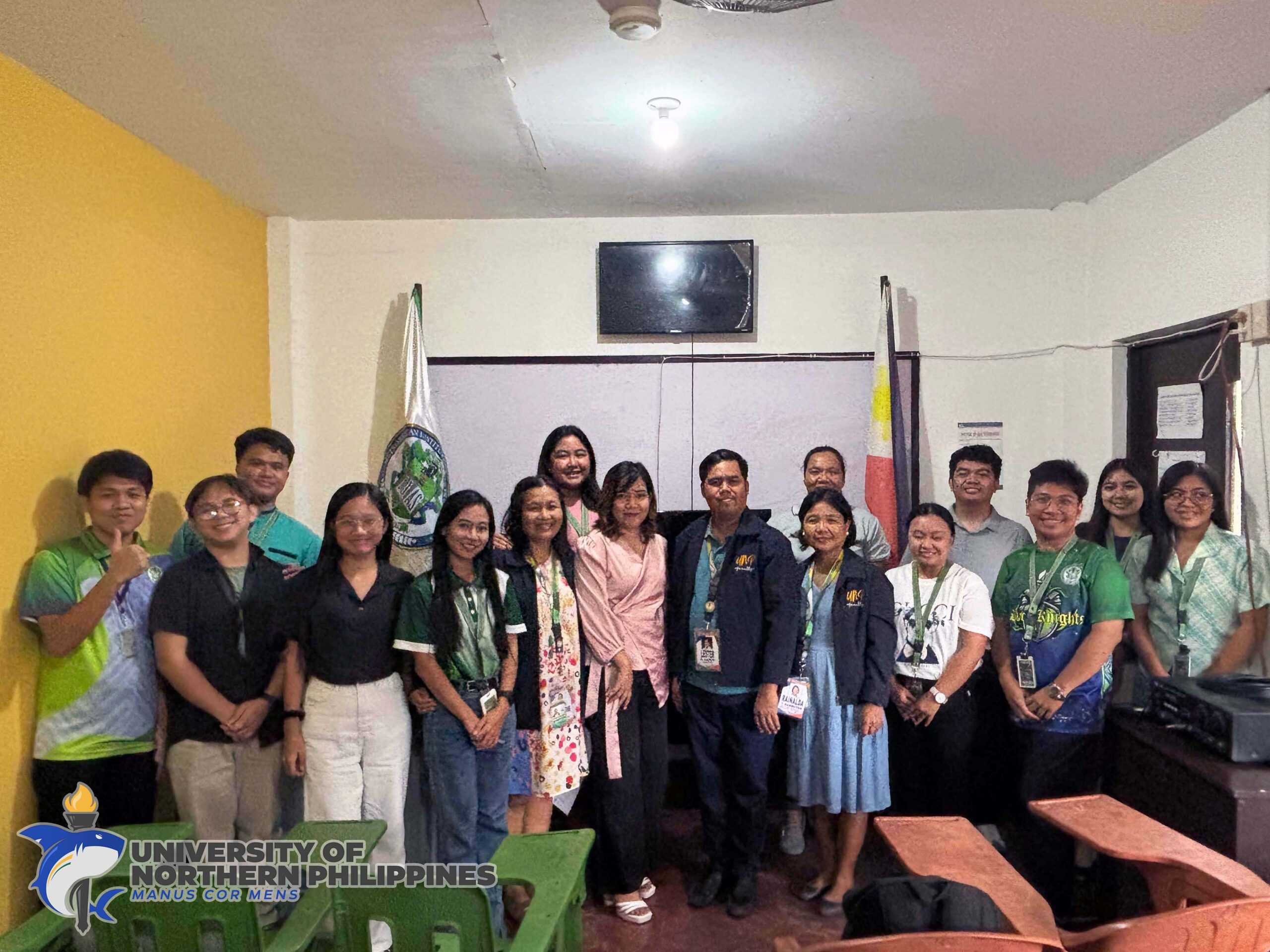
The workshop-meeting gathered representatives from 21 higher education institutions in Northern Luzon, highlighting the region’s collective commitment to preserve and advance Ilokano language, culture, and heritage through academic collaboration. The event brought together member institutions of the Amianan Consortium, including Quirino State University, Saint Mary’s University, Cordillera Career Development College, Don Mariano Marcos Memorial State University, Mariano Marcos State University, Ilocos Sur Polytechnic State College, Lyceum of Aparri, Apayao State College, Union Christian College, Lorma Colleges, Aurora State College of Technology, Kalinga State University, Benguet State University, Cagayan State University, the University of the Cordilleras, Central Luzon State University, St. Ferdinand College, Divine Word College of Bangued, Nueva Vizcaya State University, and Baguio Central University.
The broad participation of state universities, colleges, and private higher education institutions emphasized the consortium’s growing network and shared resolve to strengthen research, cultural preservation, and academic initiatives that celebrate the rich heritage of Northern Luzon.
The workshop-meeting featured a comprehensive business session focused on strengthening the consortium’s strategic direction and sustaining collaborative initiatives among its member institutions. Delegates approved the minutes of the previous meeting before reviewing matters arising from earlier resolutions to assess the progress of ongoing commitments and identify priority actions.
Consortium committees presented accomplishment reports and updates on key programs and projects, while regional deputy directors reported on the implementation and status of consortium initiatives in Northern Luzon. These presentations provided a venue for members to evaluate current efforts, exchange insights, and identify opportunities for greater collaboration in advancing Ilokano language, culture, arts, and heritage.
The delegates likewise deliberated on proposed agreements, strategic action plans, and the schedule of the consortium’s succeeding meeting. The outcomes of the discussions are expected to reinforce institutional partnerships, guide the consortium’s future programs, and further enhance regional cooperation in preserving and promoting Northern Luzon’s rich cultural legacy.
The Amianan Consortium is as a regional academic and research network that enables public and private higher education institutions to collaborate on studies involving Northern Luzon’s cultures, languages, local histories, indigenous knowledge, and social conditions. It also promotes partnerships between universities and communities to support education, cultural preservation, policymaking, and community development.