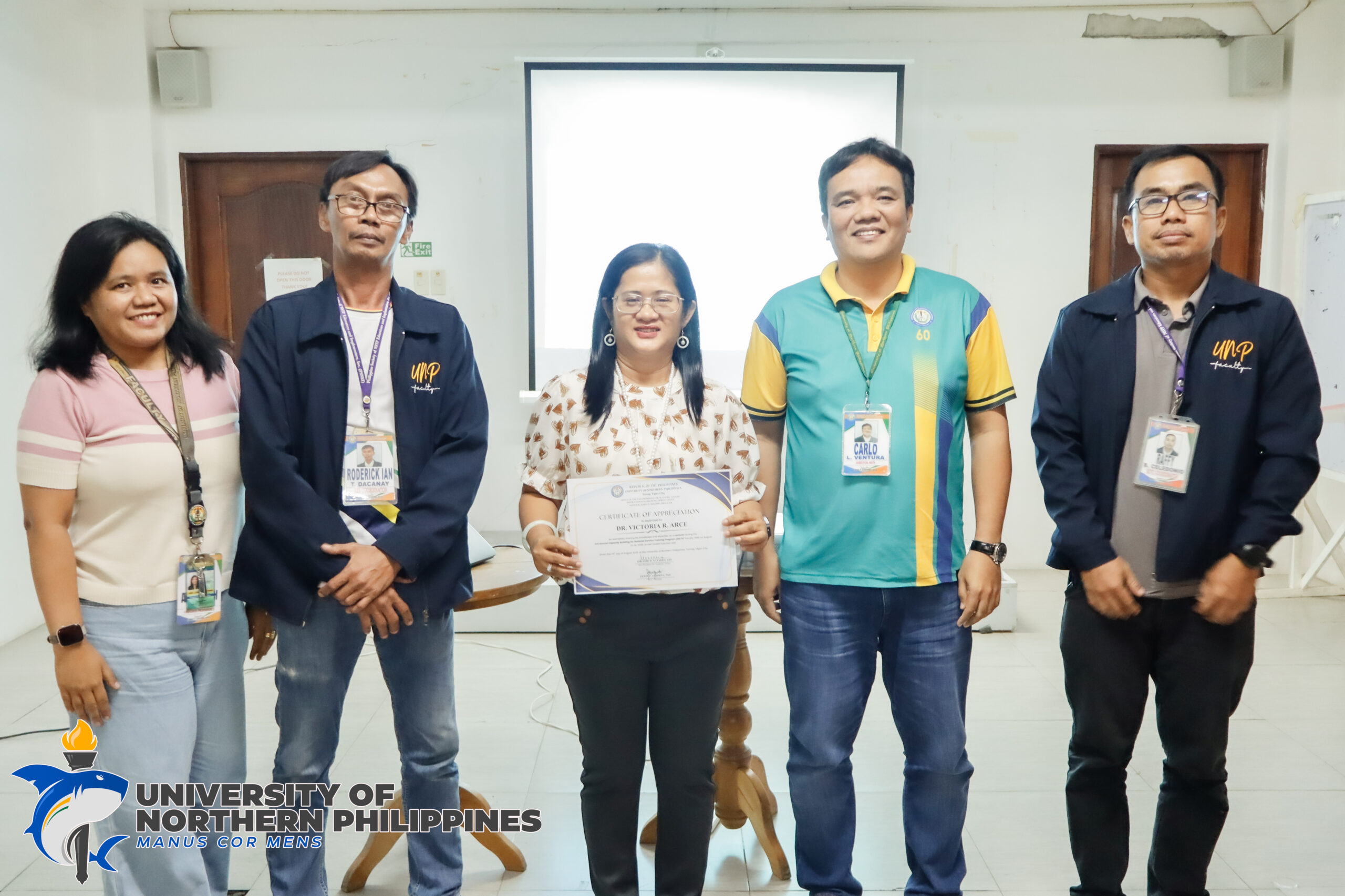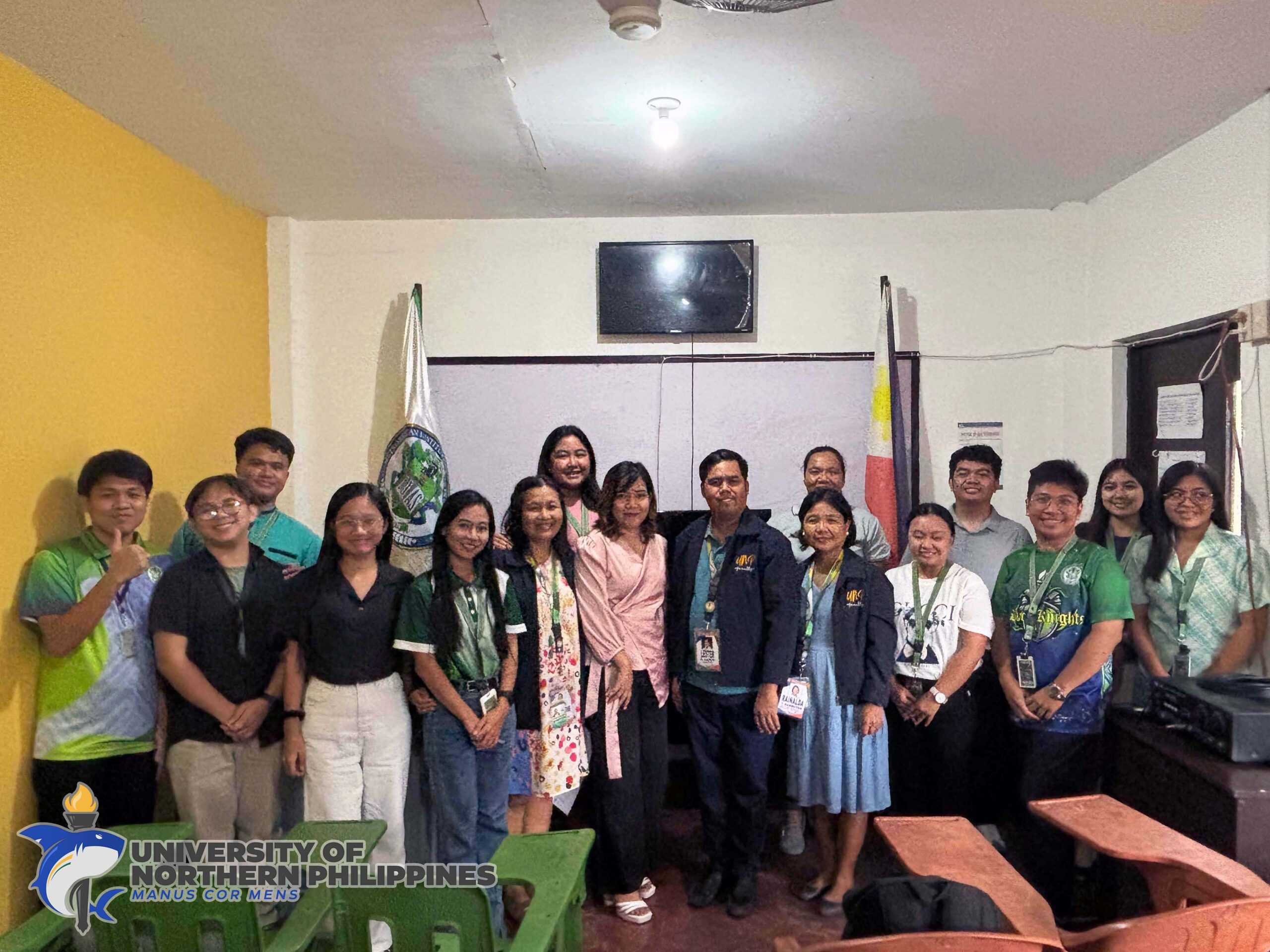
The University of Northern Philippines, through the College of Teacher Education – Master of Arts in Education (MAEd) Program, reinforced its commitment to advance teacher professional development through the “Securing Future: Mentoring the Mentor Program” and the S.I.R.I.B. Extension Program (Sharing of Insights, Resources, and Instructional Benchmarking) on August 14, 2026 at the Metropolitan Institute of Arts and Sciences–Magsingal Inc. (MIAS) in San Ramon, Magsingal, Ilocos Sur.
Held as part of the MAEd Extension Project, the Teacher Capacity Building Seminar Series brought the University’s continuing professional development efforts closer to educators, providing a strategic platform for strengthening teaching competencies, sharing instructional insights and resources, and promoting effective practices that respond to the evolving needs of the education sector.
Mrs. Genevieve T. Delmonte, Assistant Principal of MIAS, formally welcomed the participants and set the tone for the capacity-building initiative through her opening remarks, underscoring the significance of collaborative efforts in strengthening teacher development and instructional practice. Her message was followed by the introduction of the resource speakers by Dr. Alma Josefina A. Bobita, faculty member of the College of Teacher Education, who highlighted the expertise and contributions of the invited speakers to the seminar’s objectives.
The seminar deepened participants’ professional knowledge through two substantive learning modules designed to strengthen both ethical practice and instructional effectiveness. Module 2: Professional Ethics for Teachers, facilitated by Dr. Luzviminda Relon, explored the ethical standards and professional responsibilities that guide educators in carrying out their roles with integrity, accountability, and commitment to the teaching profession. Meanwhile, Module 3: Curriculum Mapping and Design, delivered by Mr. Lester Aaron, focused on essential principles of curriculum development, particularly curriculum mapping, alignment of learning outcomes, and constructive alignment. Together, the sessions equipped participants with relevant perspectives and practical approaches for ensuring that teaching practices, learning outcomes, and curricular goals are coherent, responsive, and aligned with quality education standards.
The initiative seeks to help teachers strengthen their professional practice through practical and reflective learning. It also promotes inclusive and gender-responsive teaching and supports Sustainable Development Goal 4: Quality Education.
A major requirement of the seminar series is the Teacher Professional Development Portfolio, which serves as the teachers’ principal output. The portfolio documents their participation, reflections, learning outputs, and application of the training in their classrooms. It includes outputs on inclusive teaching, professional ethics, curriculum alignment, reflective practice, and the impact of the training on student participation and classroom engagement.
The activity concluded with a forward-looking message from Dr. Rainalda Rambuyon, MAEd Program Head, who urged participants to translate the knowledge, insights, and skills gained from the training into meaningful action within their respective schools, communities, and academic endeavors. She emphasized that the impact of professional development extends beyond the seminar itself, encouraging educators to sustain a culture of continuous learning, actively share experiences and best practices, and support one another in addressing emerging challenges in education. Her message stressed the importance of collaboration and lifelong learning in promoting continuous professional growth and generating meaningful, lasting improvements in teaching and learning.
Through the MAEd Extension Project, UNP continues to bring professional learning closer to practicing teachers, encouraging them not only to gain new knowledge but also to reflect, apply, and sustain better teaching practices for the benefit of their learners.
Article by Anastacia Joven.