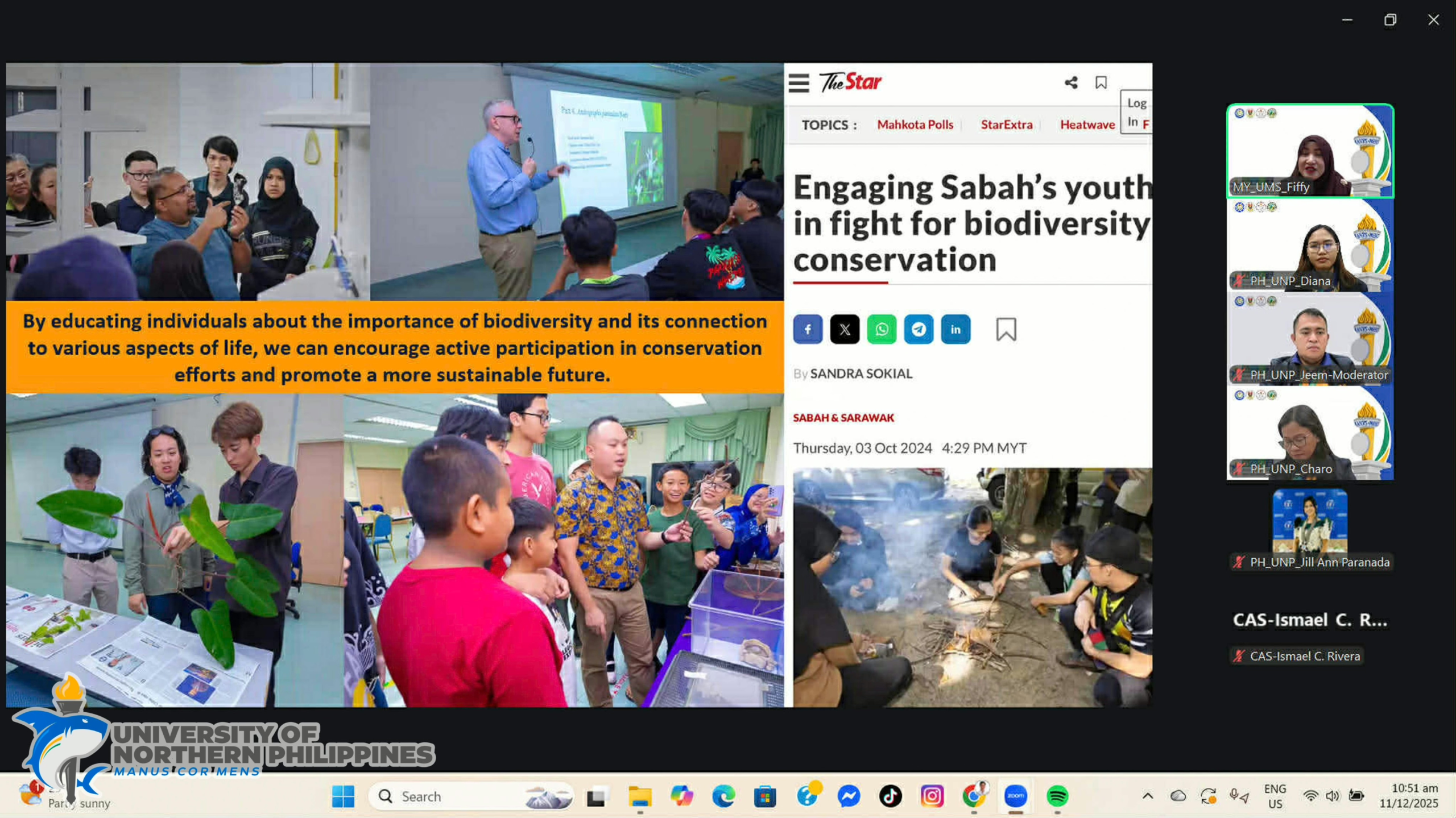
The University of Northern Philippines College of Arts and Sciences (CAS) strengthened its international engagement on December 11, 2025, as it convened scholars and advocates worldwide for “Global Conversations on People and Planetary Health (GCS Series 2),” an online webinar spearheaded by the CAS International Affairs and External Linkages Office via Zoom.
This year’s UNP-led Global Conversation Series on Health and Well-Being focused on the critical intersection of mental health and the planet’s changing environmental landscape. The event highlighted how shifts in ecosystem stability directly influence human well-being, reinforcing the need for integrated approaches that address both planetary and mental health concerns.
A highlight of the program was the presentation, “Tropical Biodiversity and Conservation: Protecting Life on Land—Stories of Wildlife, Forests, and Human Responsibility,” delivered by Assoc. Prof. Dr. Fiffy Hanisdah Saikim, Director of the Institute for Tropical Biology and Conservation at Universiti Malaysia Sabah (UMS). Dr. Saikim underscored the vital role that biodiversity plays in maintaining ecological stability, especially within tropical regions that serve as home to some of the world’s richest yet most vulnerable ecosystems and discussed the increasing pressures on wildlife and forest habitats—from environmental degradation to climate-related threats—and emphasized that effective conservation requires collective action. Dr. Saikim urged communities, educational institutions, and policymakers to strengthen collaborative efforts in protecting terrestrial ecosystems, noting that safeguarding biodiversity is not only a scientific imperative but also a shared human responsibility.
The discussion deepened the audience’s understanding of the global push toward achieving UN Sustainable Development Goal 15 (Life on Land), stressing how biodiversity loss, shrinking habitats, and irresponsible resource use are straining ecological systems. The speaker highlighted the need for stronger conservation measures—from protecting endangered wildlife to restoring forest landscapes—while urging communities to adopt more sustainable practices in their daily lives. Participants also reflected on the often-overlooked mental health impacts of environmental degradation, noting how the decline of natural spaces can affect emotional well-being, community resilience, and people’s sense of connection to the environment.
The activity was mounted through the joint efforts of the CAS Internationalization Office, the UNP BS Biology Program, the UNP Student Affairs and Services Office (SASO), the UNP Biology Society, and Universiti Malaysia Sabah—reflecting the university’s strengthened international linkages and its growing commitment to global academic collaboration.
Aligned with the institution’s mission, the initiative reinforces UNP’s core goals: elevating the quality of education, fostering research excellence, delivering sustainable community service, and supporting the mental health and overall well-being of students and personnel.
Amid escalating environmental pressures such as climate change, biodiversity loss, and accelerating ecological decline, the College of Arts and Sciences stressed the need for sustained global dialogue. The program served as a reminder that informed conversations are essential in cultivating awareness, nurturing responsibility, and mobilizing collective action to safeguard both human communities and the natural world.